
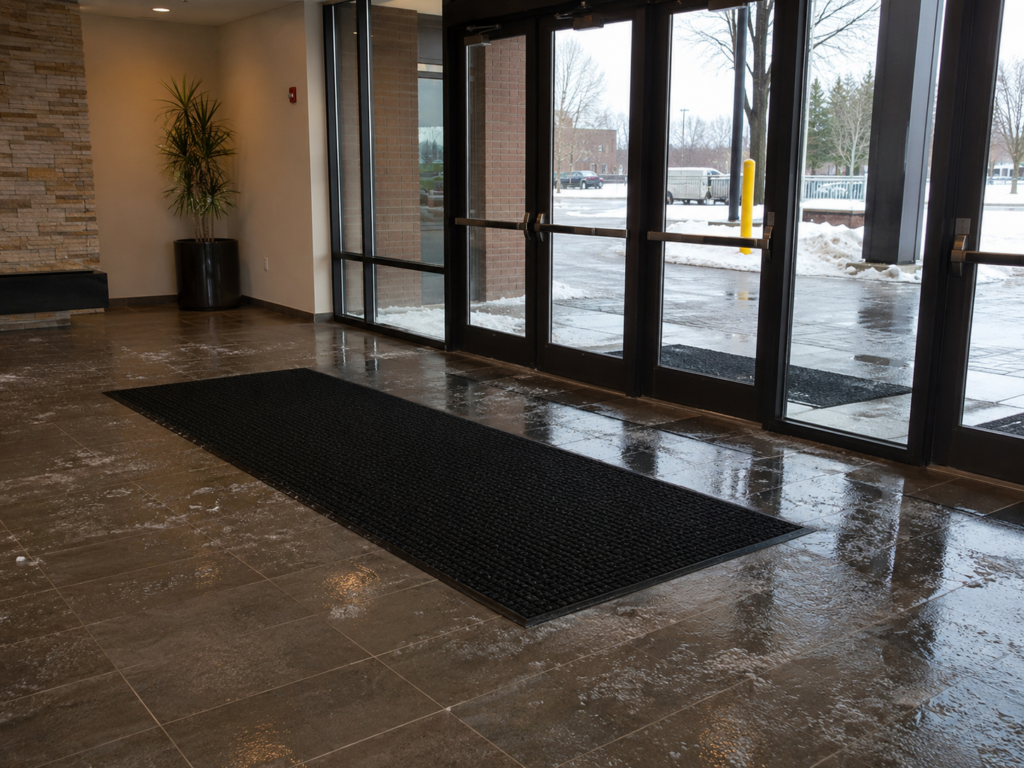
Iowa and Nebraska winters are hard on commercial facilities. From the first hard freeze in November through the last thaw in March, every business in the region faces the same sequence: snow, ice, salt, slush, tracked-in grit, and the slow, cumulative damage that follows when none of these are managed correctly at the facility level. A solid winter facility maintenance plan for Iowa and Nebraska is the difference between a proactive season and an expensive spring restoration bill.
The consequences are significant. Salt and ice melt chemicals are among the leading causes of floor finish failure, concrete surface deterioration, and carpet damage in commercial buildings across the Midwest. Facilities that do not have a winter maintenance plan typically spend two to three times as much on floor care restoration in the spring as those that manage their floors proactively throughout the season.
This guide covers the specific threats posed by Iowa and Nebraska winters to commercial floors and surfaces, as well as the products, processes, and programs that protect them effectively. If you start reading this in summer or fall, that is the right time: winter floor damage prevention is a planning and stocking exercise, not a reactive one. Browse our winter maintenance supplies and entrance matting solutions to get your facility ready for the season.
What Winter Does to Commercial Floors
Understanding why winter is so damaging to commercial floors helps clarify why the right products and protocols matter.
Salt and Ice Melt Chemistry
The most common ice melt products used on commercial walkways and parking areas in Iowa and Nebraska are sodium chloride (rock salt), calcium chloride, magnesium chloride, and blended products. Each of these lowers the freezing point of water, melting ice and snow on contact. Each also leaves behind a chemical residue that is tracked into the building on every pair of shoes, cart wheel, and pallet jack that crosses the threshold.
Once inside, these residues do serious work. Sodium chloride and calcium chloride are corrosive to floor finishes, leaving white haze and pitting on finished hard floors and stiffening carpet fibers. Magnesium chloride, widely considered less corrosive to concrete than rock salt, is still damaging to floor coatings and finishes. Blended products often contain sand or grit that acts as an abrasive, accelerating wear on the finish at high-traffic entrances.
Temperature Fluctuations and Concrete
Repeated freeze-thaw cycles are the primary cause of concrete surface spalling and cracking in commercial facilities in the Midwest. Water enters microscopic pores in concrete, freezes, expands, and fractures the surface over time. Ice melt chemicals accelerate this process by lowering the freezing point and increasing the number of freeze-thaw cycles a surface experiences. Concrete that has not been sealed or that has an aged sealer is particularly vulnerable.
Moisture Intrusion and Carpet
High foot traffic during wet winter conditions drives moisture deep into the carpet fibers and backing, creating conditions for mold and mildew growth if the carpet does not dry adequately between cleaning intervals. Wet carpet also releases soil and grit more readily into fiber structures, causing accelerated wear and permanent fiber damage in heavily trafficked entrance areas.
The First Line of Defense: Entrance Matting
Before any cleaning product or protocol can protect your floors, the most effective intervention is keeping salt, moisture, and grit from entering the building in the first place. A properly sized and positioned matting system at every building entrance can capture 80 percent or more of the soil and moisture that would otherwise be tracked across interior floors.
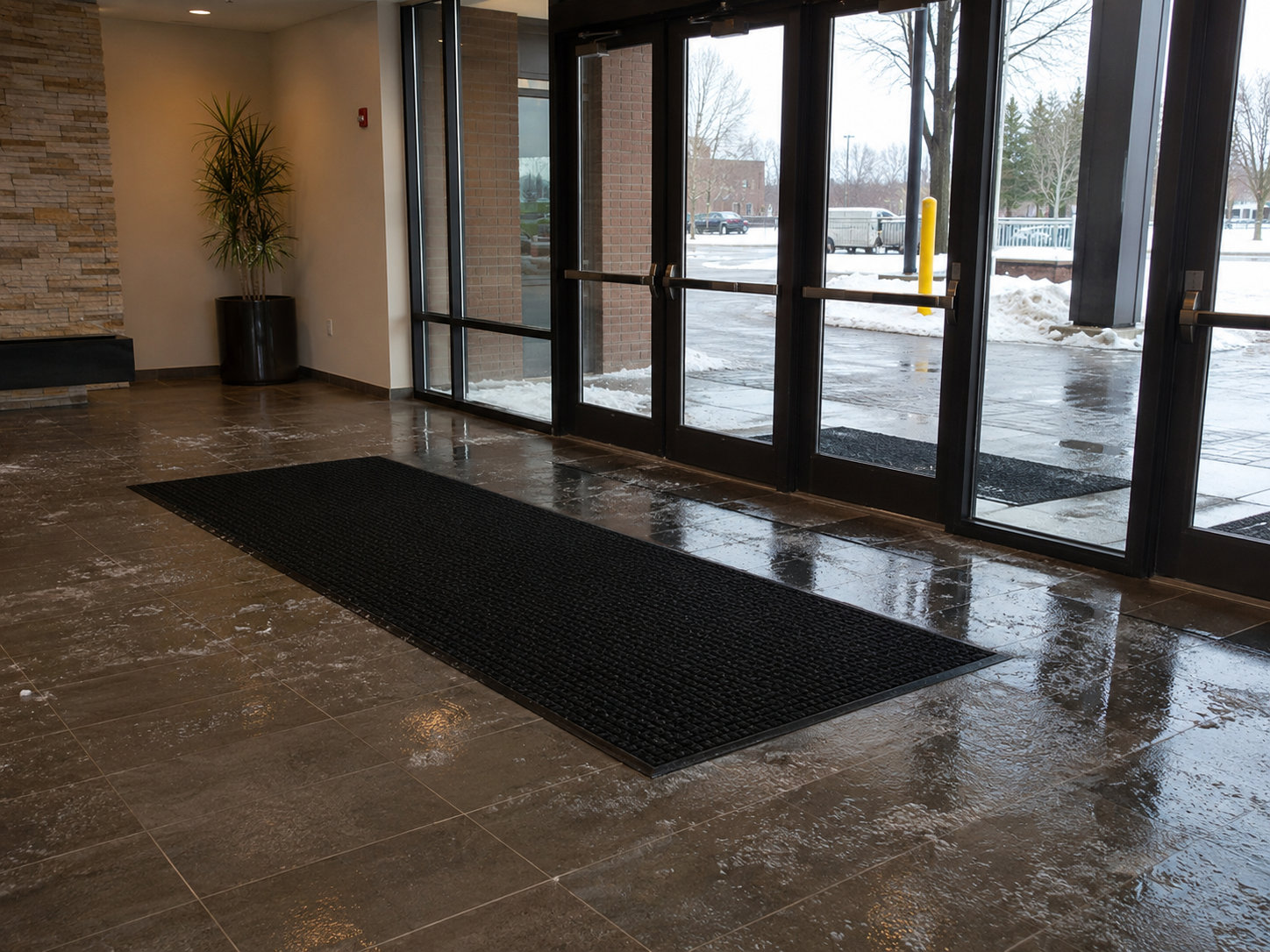
The standard matting configuration for a commercial entrance requires three zones working together:
Scraper mat (exterior): A heavy-duty textured mat positioned directly outside the entrance door removes bulk snow, ice, and grit from shoe soles before entry. Rubber or vinyl scraper mats with aggressive texture or drainage holes are best for exterior use in cold climates because they resist freezing and remain functional in very low temperatures.
Wiper-scraper mat (vestibule or transition zone): A dual-function mat positioned in the vestibule or immediately inside the first door combines scraping action with absorbency to remove residual moisture and finer particles.
Interior wiper mat: A highly absorbent interior mat captures remaining moisture and provides a clean transition surface. Carpet-topped or microfiber mat systems are most effective for this role.
The commonly cited rule for matting systems is that a mat needs at least 10 to 12 feet of length per entrance zone for every 100 steps taken across it to achieve effective soil and moisture capture. Undersized mats that are saturated or full of grit within the first hour of a wet weather day provide little protection and create a slip hazard.
Hard Floor Care Through Winter
Daily Maintenance During High-Tracking Periods
During active winter weather, increase the frequency of floor dust mopping and wet mopping at all building entrances and high-traffic corridors. Salt and sand left on a finished hard floor act as abrasives under foot traffic, accelerating finish wear in direct proportion to dwell time. The faster the tracked-in debris is removed, the slower the finish erodes.
For floors with a polymer finish, use a pH-neutral hard floor cleaner rather than an all-purpose cleaner. Many all-purpose cleaners, especially when used at concentrations higher than recommended, will strip floor finish prematurely. A neutral cleaner maintains the finish’s integrity while effectively removing soil and chemical residue. Our floor cleaning chemicals include pH-neutral options specifically formulated for winter maintenance conditions.
Salt Residue Removal
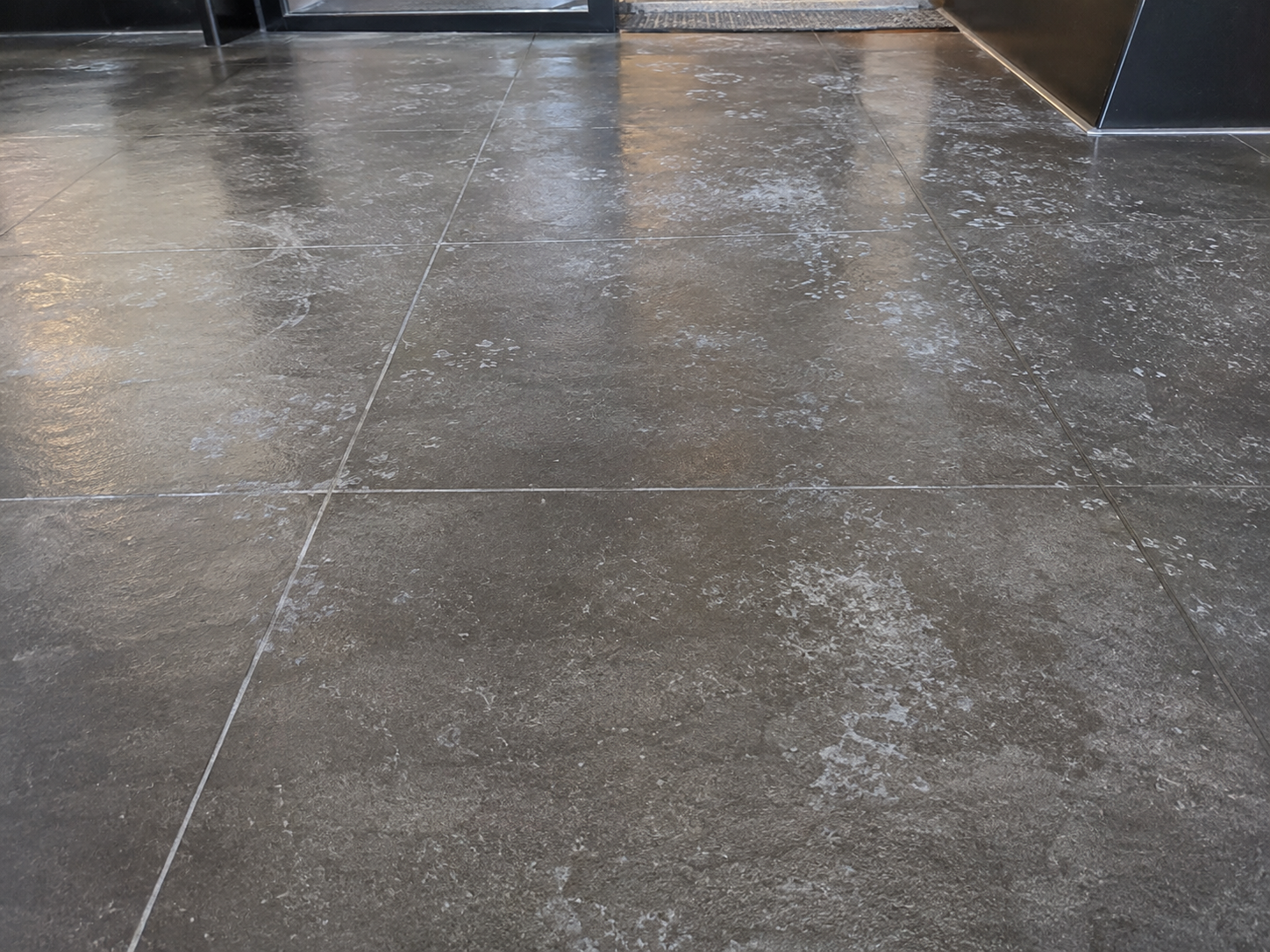
White haze or powdery residue on finished floors after wet weather is typically crystallized salt or ice melt compound. Standard pH-neutral floor cleaners will not remove this effectively. Salt residue requires a slightly acidic, neutralizing cleaner formulated to break down alkaline salt deposits without damaging the underlying floor finish.
Capital Sanitary Supply carries salt and mineral deposit removers in our floor care chemical line, formulated for this specific application. Used at regular intervals through the winter, these products prevent the buildup of salt residue that, if left untreated, eventually causes bonding failure in the floor finish and requires an unscheduled strip and recoat to correct.
Protecting Floor Finish Through the Season
The most cost-effective winter strategy for finished hard floors is applying an additional maintenance coat of floor finish at the start of the season. This sacrificial coat withstands abrasion and chemical exposure during the winter months while protecting the underlying finish. Stripping and recoating the sacrificial layer in the spring, rather than performing a full strip and refinish of the base coat, saves significant labor and product costs.
High-traffic entrance areas, main corridors, and lobby floors are the priority. These are the areas where winter tracking is most concentrated and where finish deterioration is fastest.
Concrete Floor Care
Concrete floors in warehouses, loading docks, and industrial areas are particularly vulnerable to winter damage because they are often unsealed or have aged sealers that have lost their protective function. Applying a penetrating concrete sealer before winter creates a barrier that reduces moisture intrusion and slows the freeze-thaw damage cycle.
For unsealed or damaged concrete, a concrete hardener and densifier applied before the first freeze significantly increases surface density and resistance. For facilities with existing concrete damage, a concrete repair product used in the fall prevents cracks and spalls from worsening through the winter months.
Carpet Care in Winter Conditions
Entrance Zone Carpet Maintenance
Carpet in entrance zones absorbs an enormous amount of salt, sand, and moisture during the winter months. Daily vacuuming of the entrance carpet is essential to remove grit before it becomes embedded deeper in the fiber structure under continued foot traffic. Use a commercial vacuum with strong suction and a rotating brush bar for entrance carpet, as surface-only vacuuming does not reach the grit that has settled to the base of the fiber.
For wet-weather days, plan a hot-water extraction cleaning of the entrance carpet on a more frequent cycle than your standard quarterly schedule. Salt residue that builds up in carpet fiber is highly hygroscopic, meaning it absorbs moisture from the air and keeps carpet damp even between wet-weather events. Extraction cleaning removes this residue, significantly improving drying times and air quality.
Carpet Spotters for Winter Stains
Salt and ice melt staining on carpet typically appears as white residue rings after the initial moisture evaporates. Standard carpet cleaners remove surface soil effectively but may not fully neutralize the alkaline chemistry of salt deposits. Use a carpet spotter specifically formulated for mineral and salt deposits, working from the outside of the stain ring toward the center to avoid spreading the residue.
Floor Equipment Preparation for Winter
Floor cleaning machines need to be assessed before the winter maintenance season begins. A floor scrubber or autoscrubber operating with worn squeegees or a damaged vacuum system will leave water on hard floors, creating a safety hazard and accelerating surface damage in winter conditions, when floors are already handling higher moisture loads.
Before winter arrives, inspect and replace floor-machine squeegee blades, check the vacuum motor’s performance, and verify that the recovery tank seals are intact. Our floor care equipment catalog covers autoscrubbers, burnishers, and the replacement parts and consumables to keep machines running through the season. A machine that is leaving wet streaks on the floor will cost you far more in slip incidents and floor damage through the winter than the cost of replacement parts addressed in the fall.
Winter Facility Maintenance, Iowa, Nebraska: Pre-Season Checklist
A simple pre-season checklist ensures your winter facility maintenance Iowa Nebraska program is in place before the first weather event:
- Inspect and restock entrance mat inventory; replace worn or undersized mats
- Apply a maintenance coat of floor finish to entrance areas and high-traffic corridors
- Stock salt residue remover and winter-specific floor cleaners for the season
- Inspect and replace floor machine squeegees and check vacuum performance
- Apply concrete sealer to unsealed or recently damaged concrete surfaces
- Confirm carpet extraction cleaning schedule for entrance zones
- Train cleaning staff on increased daily maintenance frequency for entrance areas during active weather events
For Iowa and Nebraska facilities served by Capital Sanitary Supply — from our Des Moines headquarters and across our full service territory — our product specialists are available to help you build a complete seasonal maintenance plan and stock the right products before winter arrives.
Frequently Asked Questions: Winter Facility Maintenance
How do I prevent salt damage to commercial floors in winter?
The most effective approach combines entrance matting to capture salt before it tracks across floors, increased daily maintenance frequency to remove salt residue before it builds up, use of a salt and mineral deposit remover on a regular schedule through the season, and application of a maintenance coat of floor finish to high-traffic areas at the start of winter.
What removes ice melt residue from commercial hard floors?
Standard floor cleaners are often insufficient to remove crystallized ice-melt residue. Use a slightly acidic neutralizing cleaner or a salt deposit remover specifically formulated to break down alkaline ice-melt compounds without damaging the floor finish. These are available through Capital Sanitary Supply in our floor care chemical category.
How often should the entrance carpet be cleaned in winter?
During active winter conditions, the entrance carpet should be vacuumed daily with a commercial vacuum that can remove deep-seated grit. Hot-water extraction cleaning should be scheduled more frequently than the standard quarterly cycle, particularly after periods of heavy tracked-in salt and moisture. Many facilities in Iowa and Nebraska schedule an extraction cleaning of the entrance carpet monthly through December, January, and February.
Should I seal my concrete floors before winter?
Yes. Concrete that is unsealed or has an aged sealer is significantly more vulnerable to freeze-thaw damage and ice melt chemical intrusion. Applying a penetrating concrete sealer in the fall creates a moisture barrier that slows the accumulation of damage throughout the season. Facilities with existing concrete damage should address cracks and spalls using a concrete repair product before sealing to prevent further deterioration during the freeze-thaw cycle.
How do I protect floor finish through a Midwest winter?
Apply an additional maintenance coat of floor finish to entrance areas and high-traffic corridors at the start of the season. This sacrificial layer absorbs winter wear while protecting the base coat. Use a pH-neutral cleaner for routine mopping to avoid prematurely stripping the finish. Plan a strip and recoat of entrance areas in the spring rather than waiting for finish failure to require emergency refinishing.
Get your facility ready for a Midwest winter.
Capital Sanitary Supply provides floor care chemicals, entrance matting, concrete care products, and facility maintenance supplies to facilities in Iowa, Nebraska, and Wisconsin year-round. Our specialists help facility managers build seasonal maintenance plans that protect their floors and reduce total maintenance costs through the toughest months of the year. Call us at (515) 244-4291 or visit capitalsanitary.com to get started.