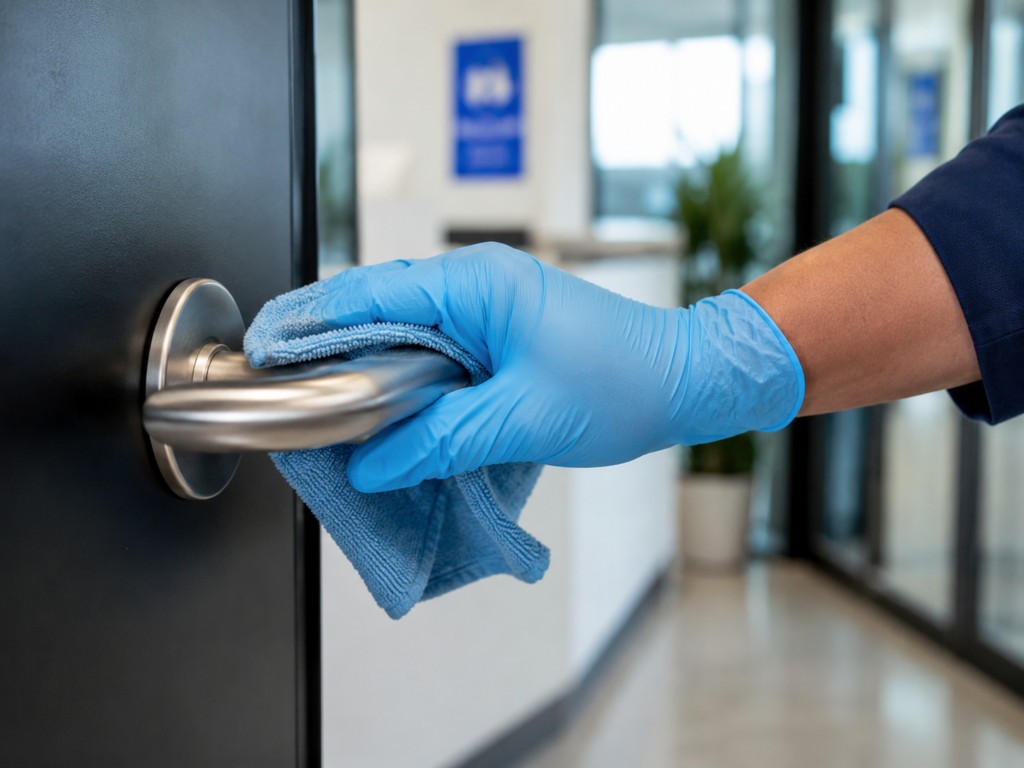
Norovirus does not give you much warning. One ill employee, one contaminated surface, one moment of poor hand hygiene. Before the week is over, half your staff is sick, and your facility is scrambling to respond. If your cleaning and disinfection program is not specifically designed to address this pathogen, you may be cleaning thoroughly yet still fail to prevent its spread.
This guide covers what facility managers need to know about norovirus, why standard disinfectants often fall short, and which EPA-registered products will actually do the job.
What Makes Norovirus So Hard to Kill
Norovirus is a highly contagious, non-enveloped virus that causes acute inflammation of the stomach and intestines. What makes it particularly difficult to control in facility settings is its physical structure. Because it lacks a lipid outer envelope, its tough protein shell allows it to survive on dry environmental surfaces for days or even weeks. That same structure makes it resistant to many common alcohol-based sanitizers.
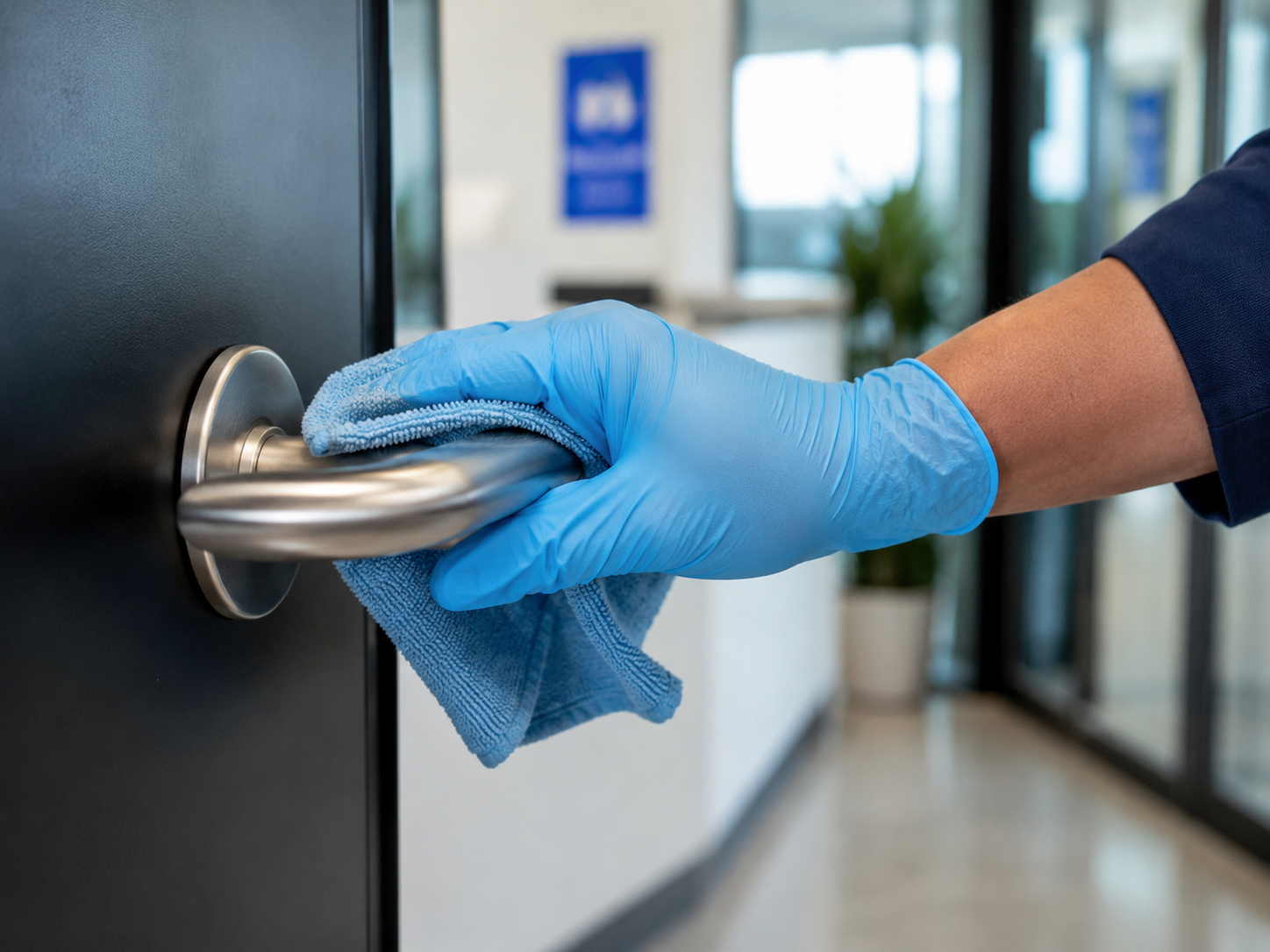
People contract the virus primarily through the fecal-oral route. This means touching contaminated high-touch surfaces like door handles, restroom fixtures, shared equipment, and cafeteria tables, and then touching one’s mouth. It can also spread through tiny airborne droplets generated when an infected person vomits, which significantly raises the stakes for any vomiting incident on your property.
Symptoms come on quickly: nausea, vomiting, watery diarrhea, and stomach cramping. The speed and ease of transmission make rapid, effective environmental response critical.
Why Your Standard Disinfectant May Not Be Enough
Not all disinfectants are created equal, and with norovirus, the difference matters. Because the virus is non-enveloped, it resists many of the chemistries that work well against common bacteria or enveloped viruses. The EPA maintains a dedicated list, called List G, of antimicrobial products registered as effective against norovirus. If your disinfectant is not on that list, you cannot count on it to eliminate the virus from surfaces.
This is one of the most common oversights in facility disinfection programs. A product may be EPA-registered, hospital-grade, and effective against dozens of pathogens, and still not carry a norovirus claim. Before an outbreak occurs, it is worth confirming that at least one product in your cleaning arsenal appears on EPA List G.
The Right Protocol for Norovirus Remediation
Effective norovirus disinfection is not just about the product you use. The CDC outlines specific environmental control protocols to follow whenever norovirus contamination is suspected, particularly after a vomiting or diarrhea incident.
Step 1: Wear Appropriate PPE
Always start with disposable gloves, long sleeves, and gowns or aprons. In cases involving vomiting or severe spills, face masks and eye protection are strongly recommended to guard against aerosolized droplets.
Step 2: Pre-Clean Organic Soil
Gross filth, vomit, or fecal matter must be physically removed before any disinfectant is applied. Use disposable absorbent cloths or paper towels, working from the outside of the spill inward to prevent the spread of contamination.
Step 3: Isolate and Dispose Safely
Place all contaminated cleaning materials directly into a plastic biohazard bag, seal it securely, and dispose of it immediately in accordance with local regulations.
Step 4: Apply a Validated EPA-Registered Disinfectant
Thoroughly spray or apply an EPA List G-approved disinfectant to the pre-cleaned surface. This step is where product selection matters most.
Step 5: Ensure Proper Wet Contact Time
Allow the surface to remain visibly wet for the full contact time specified on the product label. Cutting this time short compromises efficacy.
Step 6: Post-Cleanup Hygiene
Remove PPE carefully to avoid cross-contamination. Wash your hands thoroughly with soap and warm water immediately afterward. Alcohol-based hand gels are less effective against non-enveloped viruses such as norovirus, so handwashing is the stronger choice here.
Three Spartan Products That Meet the Standard
Capital Sanitary Supply carries a full line of Spartan Chemical disinfectants, including three that are validated for use against norovirus and available for facilities across Iowa and Nebraska.
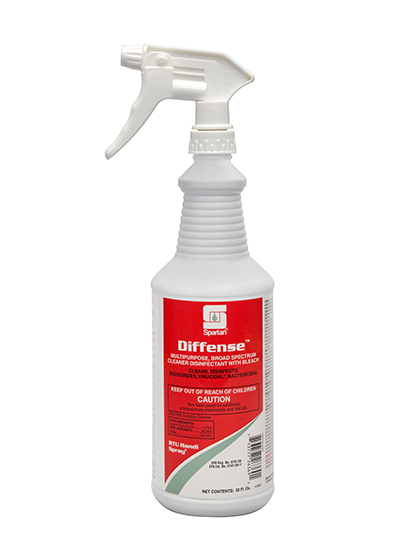
Diffense
Diffense is a ready-to-use, EPA-registered broad-spectrum cleaner disinfectant with a contact time of just 30 seconds against norovirus (EPA Reg. No. 5741-28). It has been proven to kill Clostridium difficile spores and is effective against a broad range of harmful bacteria and viruses. With its rapid kill time and no-dilution convenience, Diffense is an ideal choice for healthcare facilities, long-term care communities, and any high-traffic environment where speed and reliability are non-negotiable.
View Diffense on CapSan: https://capitalsanitary.com/spa102403.html
Profect HP
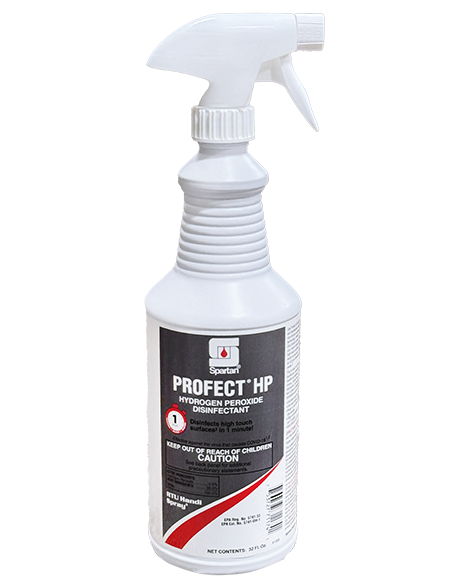
Profect HP uses patented hydrogen peroxide technology to deliver broad-spectrum disinfection in one minute (EPA Reg. No. 5741-33). Available in both a ready-to-use quart and a concentrate, it kills bacteria and viruses in 60 seconds and meets OSHA bloodborne pathogen surface disinfection recommendations. Profect HP is a strong fit for daily disinfection routines in schools, offices, and commercial facilities where consistent, high-touch surface care is part of the standard cleaning program.
View Profect HP on CapSan: https://capitalsanitary.com/spa100803.html
TB-Cide Quat
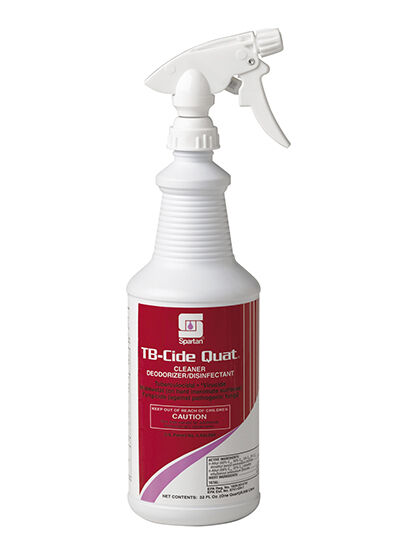
TB-Cide Quat is a ready-to-use, intermediate-level one-step cleaner, disinfectant, and deodorizer designed for use in hospitals, nursing homes, schools, and other environments where infection control is a priority (EPA Reg. No. 1839-83-5741). It is effective against Norovirus, Mycobacterium Tuberculosis, MRSA, VRE, and Canine Parvovirus, among other pathogens of concern. Its 30-second contact time and lemon scent make it a practical daily disinfection solution for restrooms, locker rooms, and patient care areas.
View TB-Cide Quat on CapSan: https://capitalsanitary.com/spa102103.html
All three products appear on the EPA’s List G of antimicrobial products effective against norovirus.
Common Mistakes to Avoid
Using alcohol-based sanitizers as your primary surface disinfectant. Hand sanitizers and alcohol-based spray sanitizers are not reliably effective against norovirus. They work on enveloped viruses but struggle with the protein capsid structure of non-enveloped viruses.
Skipping the pre-cleaning step. Applying disinfectant directly to soiled surfaces dramatically reduces efficacy. Organic matter shields the pathogen from the active ingredient. Physical removal first is not optional.
Not allowing full contact time. Wiping a surface dry before the label’s contact time has elapsed is one of the most common compliance failures in facility disinfection. Set a timer if needed.
Assuming hand sanitizer is sufficient after cleanup. After handling contaminated materials, soap and water are the right choice. Encourage your team to wash thoroughly rather than rely on a sanitizer gel.
Frequently Asked Questions
Does norovirus spread through the air? Norovirus primarily spreads through the fecal-oral route via contaminated surfaces and food. However, when an infected person vomits, tiny airborne droplets can be generated and may settle on nearby surfaces. This is why vomiting incidents require immediate response with proper PPE, including a face mask.
How long does norovirus survive on surfaces? Because norovirus lacks a lipid outer envelope, it is unusually stable in the environment. It can survive on dry surfaces for days to weeks, depending on temperature and humidity conditions.
Which disinfectants actually work against norovirus? Only EPA List G registered disinfectants have been validated against norovirus. Look for products that specifically list norovirus on their efficacy claims and appear on the EPA’s List G registry. Diffense, Profect HP, and TB-Cide Quat from Spartan Chemical all qualify.
Is hand sanitizer effective against norovirus? Most alcohol-based hand sanitizers are less effective against norovirus because the virus is non-enveloped. The CDC recommends washing hands thoroughly with soap and warm water as the preferred method of hand hygiene when norovirus is a concern.
Do I need to close my facility after a norovirus incident? Not necessarily. Prompt and thorough disinfection of affected areas using a validated product, combined with proper exclusion of ill personnel, is usually sufficient to allow continued operations. Work with your local health department if a widespread outbreak is suspected.
Get the Right Products Before You Need Them
The best time to evaluate your disinfection program is before norovirus becomes an active problem in your facility. Knowing which products to reach for, keeping them in stock, and ensuring your team understands the correct protocol puts you ahead in any outbreak scenario.
Capital Sanitary Supply carries Spartan Chemical’s full disinfectant line, including Diffense, Profect HP, and TB-Cide Quat, with delivery across Iowa and Nebraska. Our team can help you identify the right products for your facility type, confirm EPA List G compliance, and build a disinfection protocol that holds up when it matters.
Contact us at capitalsanitary.com or call your nearest CapSan location to get started.