
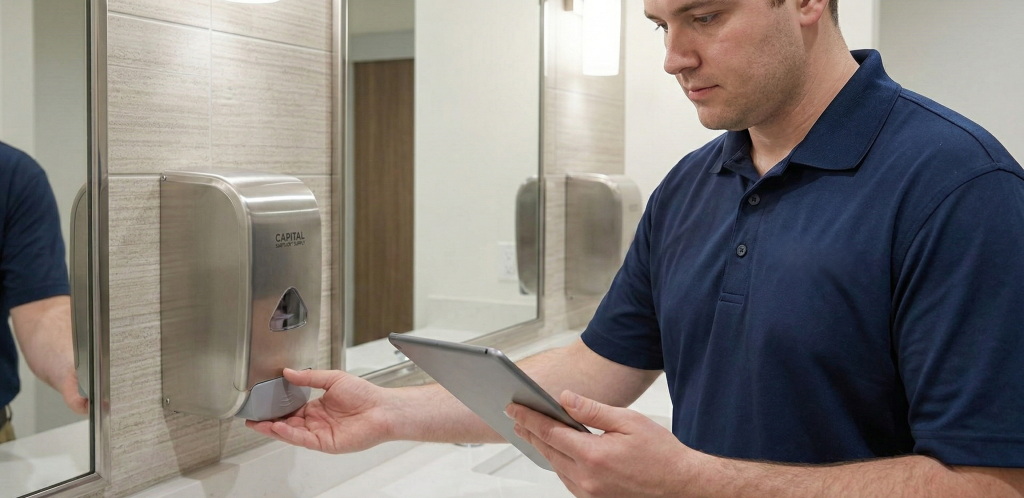
Your restrooms say more about your facility than almost any other space. Customers, patients, students, and employees make instant judgments about cleanliness standards based entirely on what they find when they walk through that door. Empty dispensers, low-quality paper products, persistent odors, and unreliable hand hygiene stations all register — and they all reflect on your organization whether you manage a restaurant, a medical office, a school, or a commercial building in Iowa, Nebraska, or Wisconsin.
But restrooms are also one of the highest-cost areas to maintain when supplies are managed poorly. Waste from overfilling, employee theft of consumer-grade products, excessive use driven by poor dispenser design, and last-minute purchases from retail stores at markup all add up. The good news is that the same decisions that improve restroom hygiene and consistency almost always reduce costs at the same time. This guide walks through how.
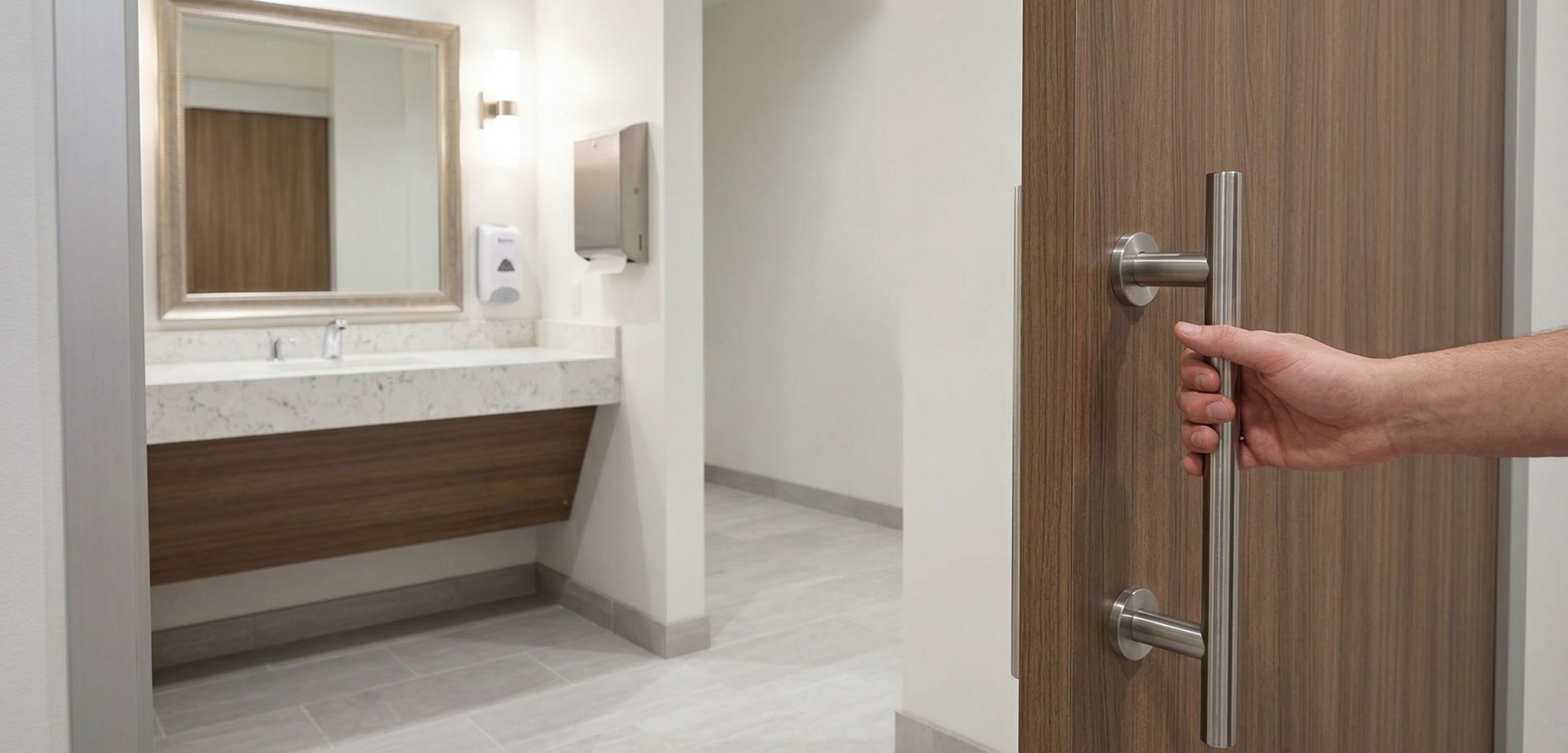
Why Restrooms Define Your Facility’s Reputation
Studies on customer behavior consistently show that restroom cleanliness is one of the top factors influencing whether people return to a business or recommend it to others. In healthcare settings, restroom hygiene is directly tied to patient safety perceptions and regulatory compliance. In schools, it affects student health outcomes and parental confidence. In food service, it directly influences health inspection scores.
The stakes are high enough that restroom supply management deserves to be treated as a strategic facility function — not just a purchasing afterthought. The three most common restroom supply failures that damage facility reputations are:
- Running out of product — empty soap dispensers, depleted paper towel rolls, and bare toilet paper holders are the most cited restroom complaints in customer surveys
- Low-quality products that perform poorly — thin toilet paper that requires excessive use, paper towels that fall apart when wet, and soap that leaves hands feeling unclean all create negative impressions
- Neglected odor and waste management — overflowing waste bins and persistent restroom odor signal that cleaning protocols aren’t keeping up with usage
Each of these failures is preventable with the right products, dispensers, and supply program.
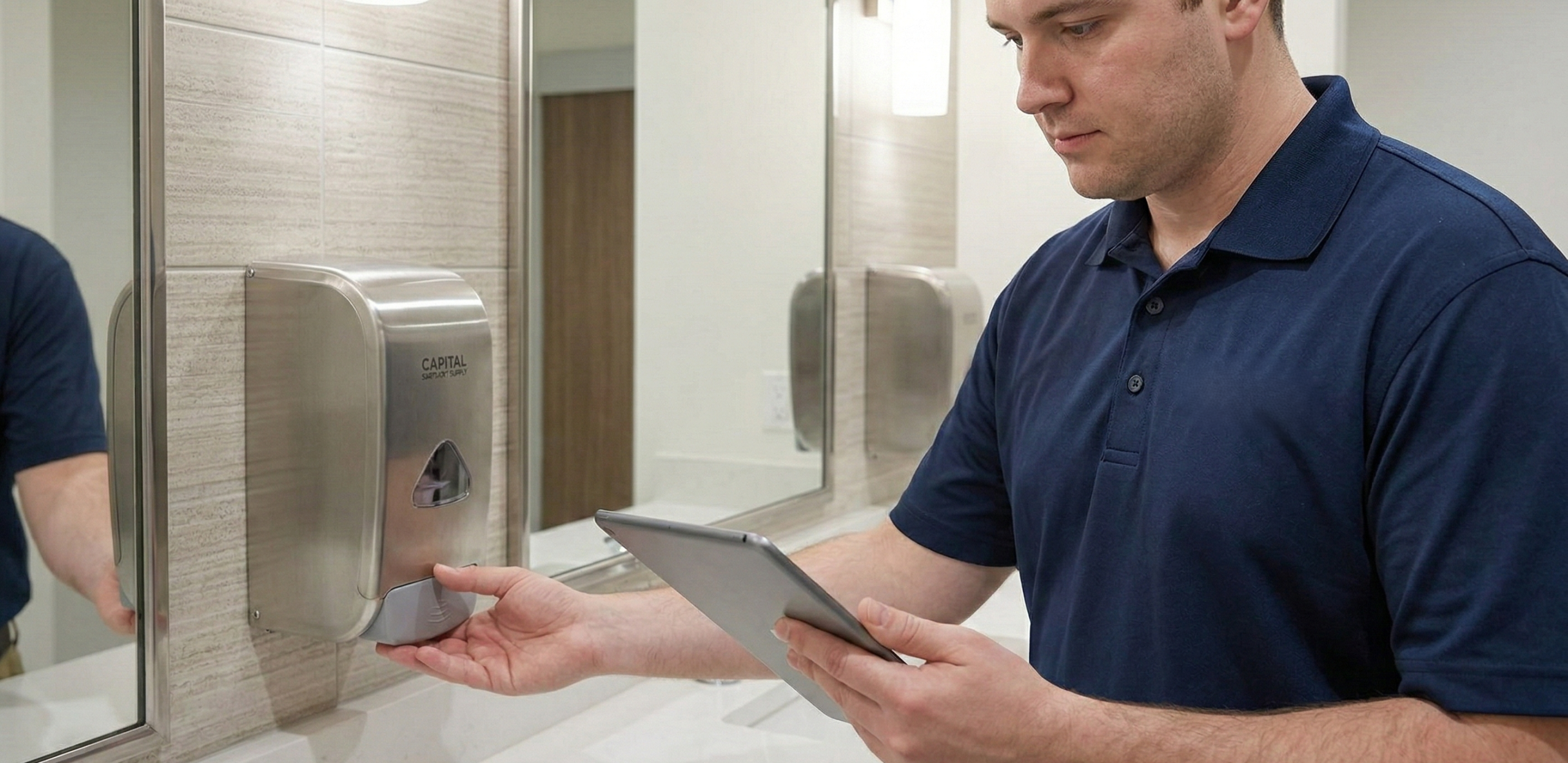
Paper Products: Choosing the Right Format to Control Cost and Improve Experience
Paper products — toilet tissue, paper towels, and seat covers — represent the single largest recurring supply cost in most commercial restrooms. The format you choose affects both your per-use cost and your user experience more than almost any other decision.
Toilet Tissue
Consumer-grade toilet tissue in standard rolls is the most expensive way to stock a commercial restroom on a per-sheet basis, and it disappears fastest because it’s easy to take home. Commercial toilet tissue formats — jumbo rolls, coreless rolls, and high-capacity twin-roll systems — deliver significantly lower per-sheet costs and are designed specifically to reduce theft and overuse.
Jumbo roll systems are the standard in high-traffic restrooms like schools, healthcare facilities, and restaurants. Controlled-release dispensers that dispense a fixed sheet length reduce waste further. Coreless rolls eliminate cardboard core waste and fit more paper per case. The right format depends on your traffic volume, your dispenser investment, and your cleaning frequency.
Paper Towels
Paper towel format is where many facilities leave the most money on the table. Folded paper towels — C-fold, multifold, and interfold — are the most common format but also among the most wasteful because users typically pull multiple sheets at once. Center-pull rolls and controlled-dispensing roll towel systems dispense one sheet at a time, which consistently reduces per-use consumption by 20–40% compared to folded formats.
High-traffic restrooms benefit from high-capacity roll towel dispensers that hold more paper and require less frequent refilling by your cleaning staff — which reduces labor cost and the risk of running out between service intervals.
Matching Ply and Sheet Size to Your Facility
Higher-ply and larger sheet-size products cost more per case but often cost less per use because customers use fewer sheets to accomplish the same task. The relationship between product quality and actual consumption is one of the most consistently underestimated factors in restroom supply cost management. Before assuming that a lower-priced product saves money, calculate the cost per use — not the cost per case.
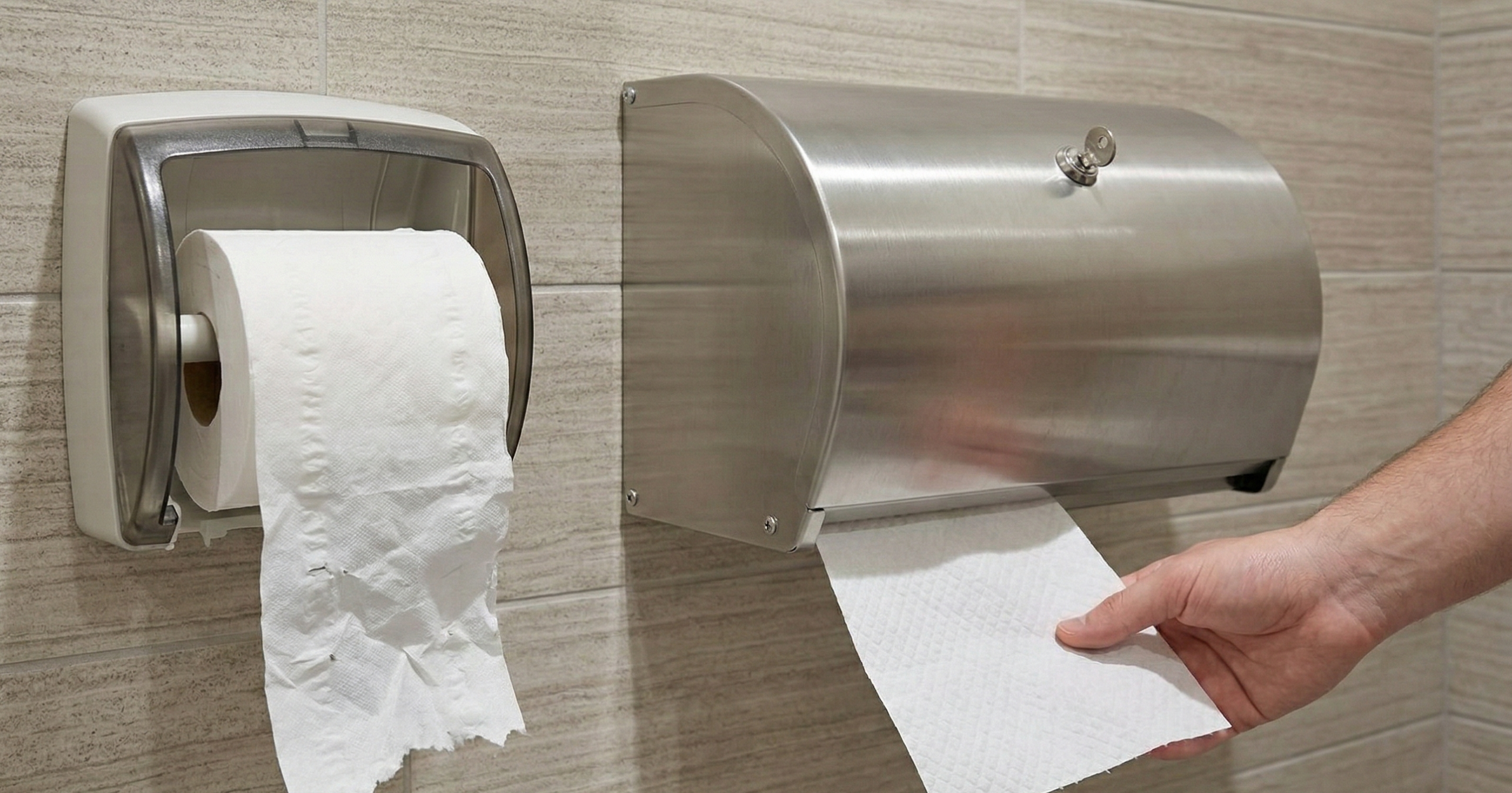
Dispensers: The Hidden Multiplier of Your Paper Product Costs
The dispenser is not a one-time capital purchase that you buy and forget. It is an active cost control mechanism — or a cost amplifier — depending on which one you choose. The right dispenser for each product type can reduce consumption by 20–40% compared to the wrong one.
Controlled-Dispensing Systems
Dispensers that control how much product a user can access per use — timed paper towel dispensers, stub-roll toilet tissue holders, or dispensers with adjustable sheet length settings — are one of the most straightforward investments a facility can make to reduce ongoing supply costs. The upfront cost of a quality dispenser is typically recovered within months through reduced product consumption.
High-Capacity Dispensers
High-capacity dispensers that hold larger rolls or multiple rolls reduce how frequently your cleaning staff needs to check and refill restrooms. In high-traffic facilities, this directly reduces labor cost and the likelihood of a dispenser running empty between cleaning rounds. Many high-capacity dispensers are also designed to switch to a backup roll automatically when the primary roll is depleted — eliminating the most common cause of empty dispensers.
Lockable and Vandal-Resistant Dispensers
In schools, parks, transit facilities, and other public or semi-public environments, lockable dispensers prevent product theft and vandalism that can significantly inflate supply costs. These are a necessary investment in any facility with limited supervision over restroom access.
Matching Dispenser to Product
Always source dispensers and paper products from the same supplier when possible, and verify compatibility before purchase. A paper towel roll that is too wide, too narrow, or wound on the wrong core diameter for your dispenser creates jamming, tearing, and staff frustration — which leads to your cleaning team bypassing the dispenser entirely and stacking product on the counter, where waste skyrockets.
Hand Soap and Hand Hygiene: Touchless Systems and What They Actually Save
Hand hygiene is the most health-critical function in any commercial restroom. The soap dispenser is the highest-touch surface in the room — and if it’s a manual push-top dispenser, it may actually be spreading bacteria every time someone uses it before washing their hands.
Touchless Foam and Liquid Soap Dispensers
Automatic, sensor-activated soap dispensers eliminate hand contact with the dispenser itself, which is a meaningful hygiene improvement in any facility and a significant one in healthcare and food service environments. They also dispense a precisely metered dose of soap on every activation, which eliminates the waste that comes from manual over-pumping. Most facilities that switch from manual to touchless foam dispensers see soap consumption drop by 30–50%.
Foam soap formats in particular deliver strong cost advantages: foam is created by mixing liquid soap concentrate with air, which means foam dispensers use significantly less actual soap per wash than gel or liquid dispensers while still delivering effective hand cleaning. For high-traffic facilities, the cost difference over a year is meaningful.
Bulk-Fill vs. Cartridge Dispensing Systems
Bulk-fill dispensers are refilled directly from soap concentrate containers and are typically lower cost per fill. Cartridge-based systems use sealed, pre-filled cartridges that eliminate contamination risk during refilling and are faster for cleaning staff to change out. In healthcare and food service settings where cross-contamination is a concern, cartridge systems offer an important hygiene advantage. In standard office or retail settings, bulk-fill systems are more economical.
Hand Dryers vs. Paper Towels: What Actually Makes Sense for Your Facility
The hand dryer vs. paper towel debate is one of the most common questions facility managers ask — and the honest answer is that neither is universally better. The right choice depends on your facility type, traffic volume, and operational priorities.
The Case for High-Speed Hand Dryers
Modern high-speed hand dryers dry hands in 10–15 seconds, consume significantly less energy than older warm-air dryers, and eliminate the ongoing purchase, storage, and waste of paper towels entirely. In high-traffic restrooms where paper towel waste and disposal are significant cost and labor issues, a quality hand dryer pays for itself within one to three years and then continues to deliver savings indefinitely.
The drawback: hand dryers require an upfront capital investment, require electrical infrastructure, need periodic maintenance, and don’t work during power outages. They also generate noise, which matters in certain environments like healthcare facilities or quiet office buildings.
The Case for Paper Towels
Paper towels dry hands faster and more completely in user experience studies, require no power or maintenance, and offer users a familiar and preferred experience in most settings. They also do double duty — users regularly use paper towels to open restroom doors and wipe up spills. In environments where user perception of cleanliness is especially important — upscale restaurants, medical offices, executive facilities — paper towels typically perform better on customer satisfaction measures.
The Hybrid Approach
Many facilities in Iowa, Nebraska, and Wisconsin run hybrid systems — high-speed dryers as the primary drying method with a controlled-dispensing paper towel unit as backup. This approach captures most of the cost savings of dryers while maintaining a paper option for users who prefer it and ensuring continuity if a dryer needs service.
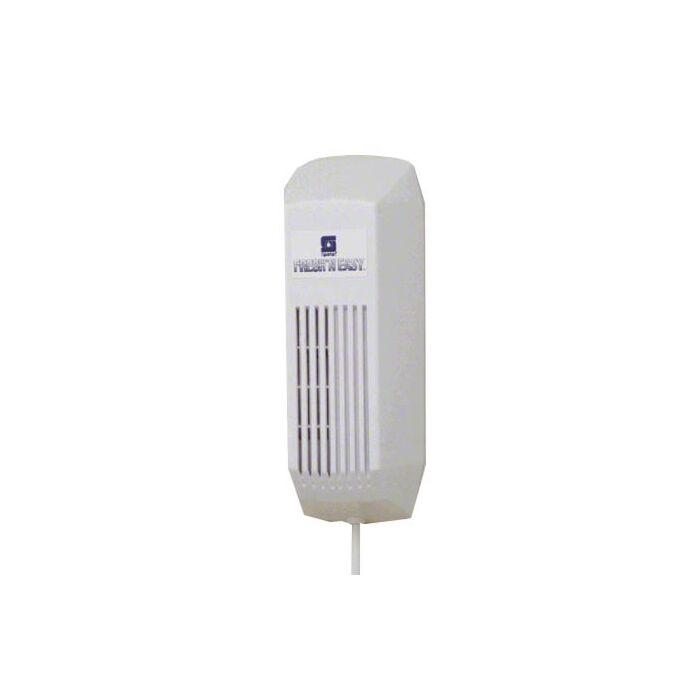
Odor Control and Waste Management: Completing the Restroom Program
A restroom that smells bad undermines every other investment you make in it. Odor control is not just about air freshener — it is about waste management frequency, drain maintenance, and surface cleaning working together.
- Automatic air freshener dispensers on programmable timers deliver consistent fragrance throughout the day without relying on manual spraying
- Urinal screens and drain deodorizers address odor at the source rather than masking it at the air level
- Waste receptacles sized to your traffic volume prevent overflow between cleaning rounds — a waste bin that fills up in two hours in a restroom serviced every four hours is the wrong bin for that location
- Hands-free waste receptacles with step-open or sensor lids reduce contact and improve hygiene perception significantly
- Feminine hygiene receptacles in women’s restrooms are a basic expectation that is still overlooked in some facilities
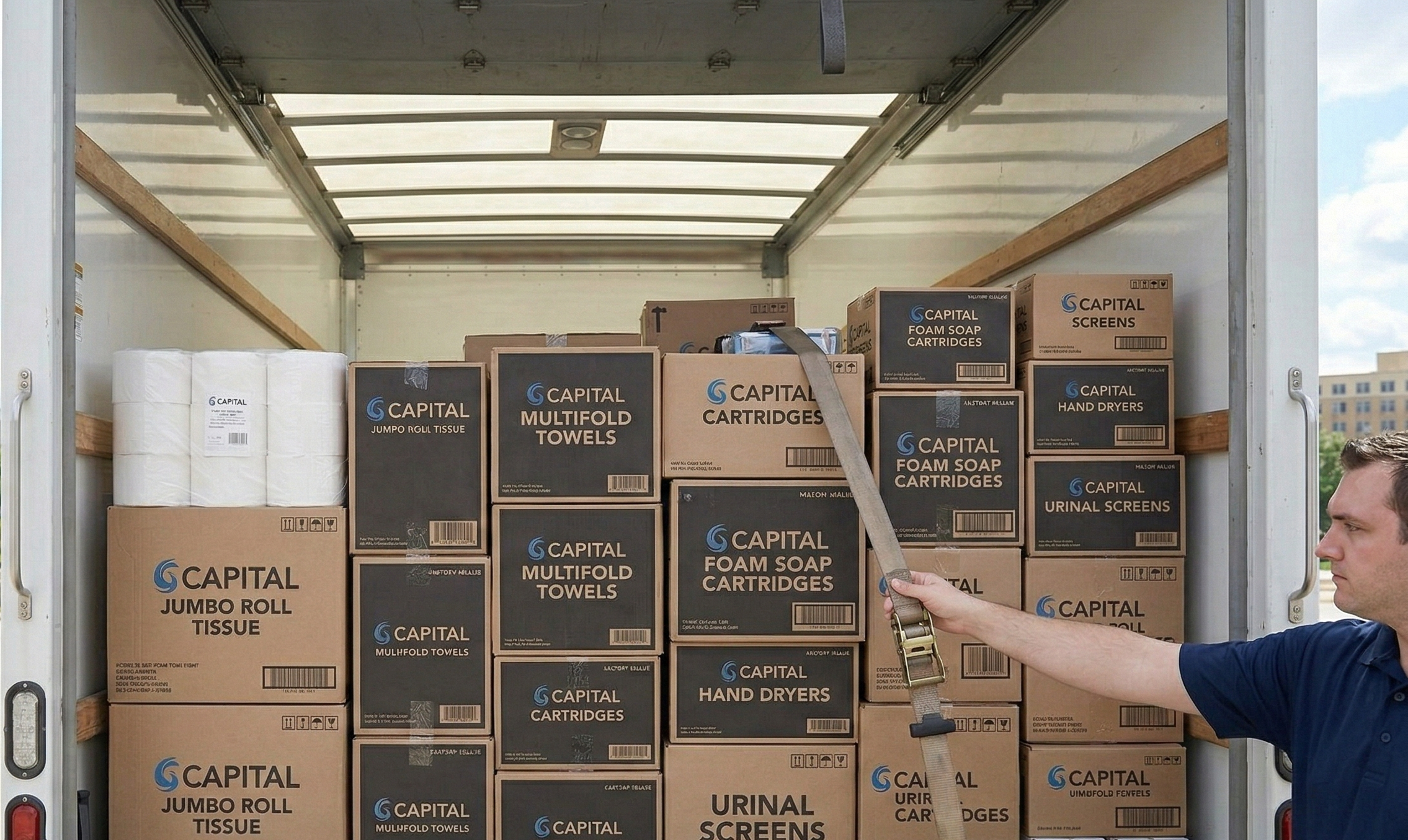
Building a Restroom Supply Program That Runs Itself
The most effective restroom supply programs are designed so that cleaning staff spend less time managing product and more time actually cleaning. That means:
- High-capacity dispensers that don’t need to be checked every hour in busy restrooms
- Par levels set for every product with automatic reorder triggers so you never run out
- Compatible products and dispensers sourced from a single supplier to eliminate refill and jamming issues
- A restroom audit schedule that catches maintenance issues — a dryer that’s not working, a dispenser that’s jammed — before a customer finds them first
Capital Sanitary Supply works with facility managers across Iowa, Nebraska, and Wisconsin to build restroom supply programs that are cost-effective, consistently stocked, and matched to the specific traffic volume and facility type of each customer. From paper products and dispensers to hand dryers, soap systems, odor control, and waste receptacles, we supply the full restroom from a single source with reliable regional delivery.
The Bottom Line: A Better Restroom Program Costs Less and Performs Better
The counterintuitive truth about commercial restroom supply management is that better products and better dispensers almost always cost less in practice than cheaper alternatives bought without a system. Controlled dispensers, quality paper formats, touchless soap systems, and proper odor management all reduce waste, reduce labor, and reduce the supply cost per use — while delivering a noticeably better experience for everyone who uses your restrooms.
Start with an audit of your current restroom supply costs and dispenser formats. The opportunities to reduce cost and improve performance are almost always visible within the first 20 minutes of honest assessment.
Ready to build a smarter restroom supply program for your facility?
Capital Sanitary Supply carries commercial toilet tissue, paper towels, touchless soap dispensers, hand dryers, odor control products, and waste receptacles for businesses across Iowa, Nebraska, and Wisconsin. Our specialists help facility managers cut costs without cutting corners. Call us at (515) 244-4291 or visit capitalsanitary.com to get started.
Frequently Asked Questions: Commercial Restroom Supplies
What restroom supplies does a commercial facility need?
A fully stocked commercial restroom requires toilet tissue, paper towels or a hand dryer, hand soap with a dispenser, waste receptacles, and odor control products at minimum. Most commercial facilities also need seat covers, feminine hygiene receptacles in women’s restrooms, and air freshener dispensers. The specific format of each product — jumbo rolls vs. standard rolls, foam soap vs. liquid, paper towels vs. dryers — depends on your traffic volume, facility type, and budget.
How do I reduce paper towel costs in my business restrooms?
The most effective way to reduce paper towel costs is to switch from folded paper towel formats to a controlled-dispensing roll towel system, which reduces per-use consumption by 20–40% because users can only pull one sheet at a time. Matching your dispenser to your paper product for correct compatibility also reduces waste from jamming and tearing. Buying in case quantities from a commercial distributor rather than retail sources typically reduces per-unit cost by 30–50% as well.
Are touchless soap dispensers worth it for a commercial restroom?
Yes, for most commercial facilities. Touchless soap dispensers eliminate hand contact with the dispenser — a meaningful hygiene improvement — while dispensing a precise metered dose that reduces soap consumption by 30–50% compared to manual dispensers. Foam soap formats available in touchless dispensers use less liquid soap per wash than gel or liquid formats, reducing the cost per hand wash further. The upfront cost of quality touchless dispensers is typically recovered within the first year through soap savings alone in moderate-to-high traffic restrooms.
Are hand dryers or paper towels more cost effective for a commercial restroom?
High-speed hand dryers are more cost effective over time in high-traffic restrooms — typically paying for themselves within one to three years through eliminated paper towel costs and delivering ongoing savings after that. However, dryers require capital investment, electrical infrastructure, and periodic maintenance. Paper towels offer lower upfront cost, no maintenance requirement, and a preferred user experience in settings where customer perception is especially important. Many facilities run hybrid systems with dryers as the primary option and a controlled-dispensing paper towel unit as backup.
How do I control odor in a commercial restroom?
Effective restroom odor control requires addressing the source, not just masking it. Urinal screens and drain deodorizers target odor at its origin, while automatic air freshener dispensers on programmable timers maintain consistent fragrance throughout the day. Ensuring waste receptacles are sized correctly for your traffic volume — so they don’t overflow between cleaning rounds — and maintaining proper drain cleaning with enzymatic drain treatments are equally important. Odor that persists despite air fresheners is almost always a drain or waste management issue, not a fragrance issue.
Where can I buy commercial restroom supplies wholesale in Iowa, Nebraska, or Wisconsin?
Capital Sanitary Supply stocks a full range of commercial restroom supplies — toilet tissue, paper towels, dispensers, touchless soap systems, hand dryers, odor control products, and waste receptacles — for businesses across Iowa, Nebraska, and Wisconsin. We serve facility managers, building service contractors, schools, healthcare facilities, restaurants, and office buildings with reliable regional delivery and expert product guidance. Visit capitalsanitary.com or call (515) 244-4291 to speak with a specialist.