There is a category of commercial cleaning products that most facility managers have heard of, but few have fully evaluated: enzyme cleaners for commercial facilities and organic waste management. They are frequently recommended for drains, grease traps, restrooms, and odor control, but the explanation offered for why they work is often vague. “They eat the waste” is technically approximately correct, but it omits enough detail for facility managers to make an informed product selection or application decision.
This post explains exactly how enzyme and bacterial treatments work, what they do well, where they fall short, and how facilities in Iowa, Nebraska, and Wisconsin can use them to solve specific problems that conventional caustic chemicals either cannot address or can only address temporarily at high cost. Browse our full line of enzyme and bacteria treatments to see what is available for your facility’s specific application.
What Enzyme Cleaners Actually Do
Enzyme cleaners work through biological chemistry rather than caustic or oxidizing chemistry. The distinction matters because it determines where these products outperform conventional cleaners and where they do not.
Enzymes vs. Bacteria: Two Related Approaches
These terms are frequently used interchangeably in product marketing, but they refer to distinct mechanisms.
Enzyme treatments contain purified enzymes derived from microbial fermentation. Enzymes are biological catalysts: protein structures that accelerate specific chemical reactions without being consumed by those reactions. In cleaning applications, enzymes catalyze the breakdown of specific organic compounds. The most common enzymes in cleaning products are:
- Proteases: Break down proteins, including blood, food waste, body soil, and urine residue
- Lipases: Break down fats, oils, and greases, including cooking grease, body oils, and soap scum
- Amylases: Break down starches and carbohydrates, including food residue and paper pulp
- Cellulases: Break down plant fiber and cellulose-based materials
Each enzyme is highly specific: a protease will not break down grease, and a lipase will not break down protein. Effective multi-purpose enzyme cleaners contain blended enzyme packages that cover multiple substrate types simultaneously.
Bacteria treatments (also called bio-enzymatic treatments) go a step further. These products contain live or spore-forming bacterial cultures, typically from the Bacillus family, that produce their own enzymes in situ. When introduced into an environment with available organic material, the bacteria activate, multiply, and continuously produce the enzymes needed to break down the organic substrate present.
The key advantage of bacterial treatments over enzyme-only products is sustained activity over time. A pure enzyme product depletes as it catalyzes reactions. A bacterial treatment maintains enzyme activity as long as the bacterial population is active and an organic substrate is present. This makes bacterial treatments significantly more effective for applications requiring prolonged organic breakdown, such as drain lines, grease traps, holding tanks, and sub-surface odor sources in flooring and grout.
What Happens at the Molecular Level
When an enzyme encounters its target substrate (for example, a lipase binding to a grease deposit), it binds to the substrate and catalyzes its breakdown into smaller, water-soluble components. Fats are broken down into glycerol and fatty acids. Proteins are converted to amino acids. These smaller molecules are then water-soluble and can be flushed away or further metabolized by bacteria.
Bacterial treatments accelerate this further. The Bacillus bacteria in these products are facultative anaerobes, meaning they can function in both aerobic (oxygenated) and anaerobic (low-oxygen) environments. This allows them to function in drain lines, grease trap bottoms, and sealed holding tanks where aerobic bacteria could not survive. They continue producing lipases, proteases, and other enzymes continuously, progressively eliminating the organic buildup that feeds odor-producing sulfate-reducing bacteria.
Where Enzyme and Bacteria Treatments Work Best
Understanding the chemistry helps identify the application categories where enzyme cleaners for commercial facilities are the right tool.
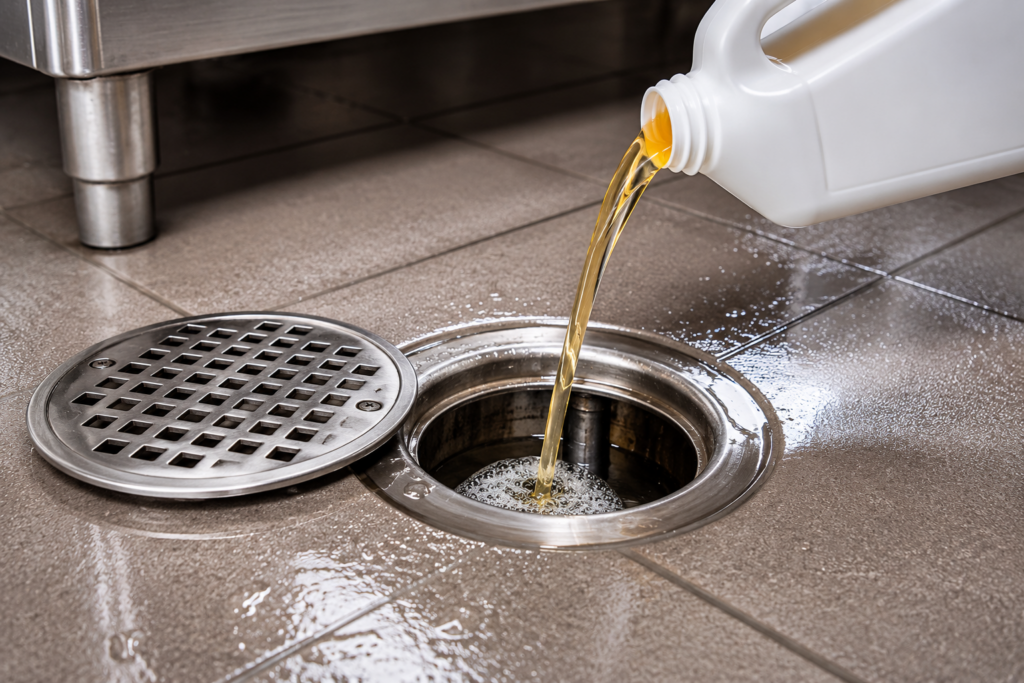
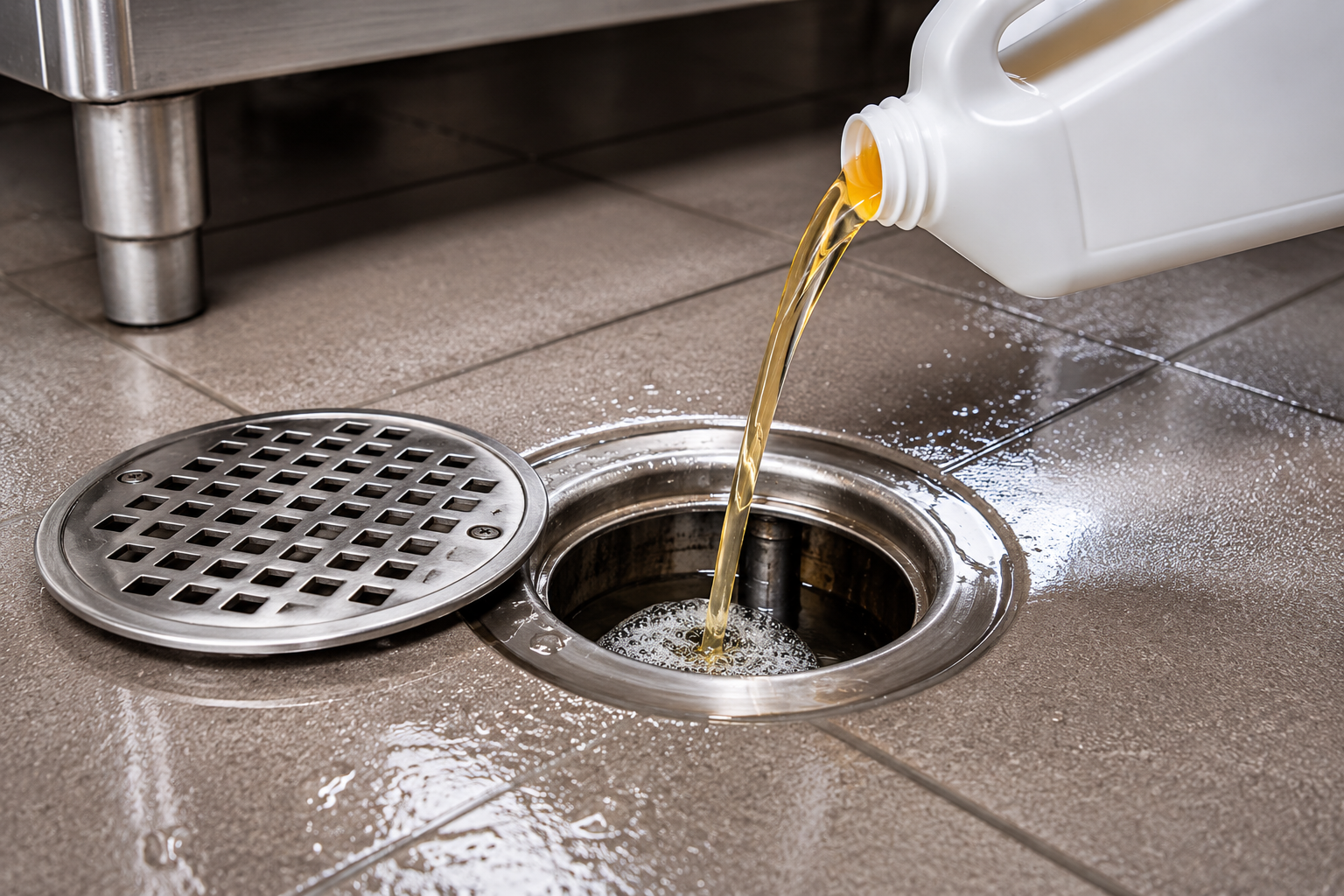
Drain Lines and P-Traps
Grease, food particles, soap scum, and protein-based biofilm accumulate in drain lines over time. In commercial kitchens and food service facilities, this accumulation can become significant within weeks of a deep cleaning. Conventional caustic drain cleaners (sodium hydroxide-based) break up blockages by saponifying fats and hydrolyzing proteins, but they do not address the biofilm that remains on pipe walls and continues to generate odor and accumulate new deposits.
A weekly bacterial treatment added to drains creates a sustained microbial population on pipe walls that continuously degrades the organic film left by conventional cleaners. Over six to eight weeks of consistent treatment, pipe walls typically show a measurable reduction in biofilm thickness and a corresponding reduction in odor generation.
The treatment approach: apply 2 to 4 ounces of a concentrated bacteria treatment down each drain at the end of the operating day, when the drain will sit undisturbed through the night. The bacteria need several hours of contact time with the pipe wall to establish a population. Regular weekly dosing maintains the microbial community.
Grease Traps and Interceptors
Grease traps and grease interceptors in commercial food service facilities accumulate fat, oil, and grease (FOG) at a rate determined by menu composition and kitchen volume. Conventional management relies entirely on scheduled pumping, which, in a high-volume kitchen, may be required monthly or more often.
Bacteria treatments dosed consistently into grease traps introduce a sustained population of grease-consuming Bacillus strains that can meaningfully reduce FOG accumulation rate between pump cycles. Well-documented case studies in food service applications show 40 to 60 percent reductions in pumping frequency when bacteria treatments are properly and consistently applied.
The treatment approach: add bacteria treatment through the drain that feeds the grease trap, not directly into the trap, to allow bacteria to populate the pipe walls on the way to the interceptor. Dose frequency depends on kitchen volume and trap size; your Capital Sanitary Supply specialist can help size the program for your operation.
Restroom Odor Control
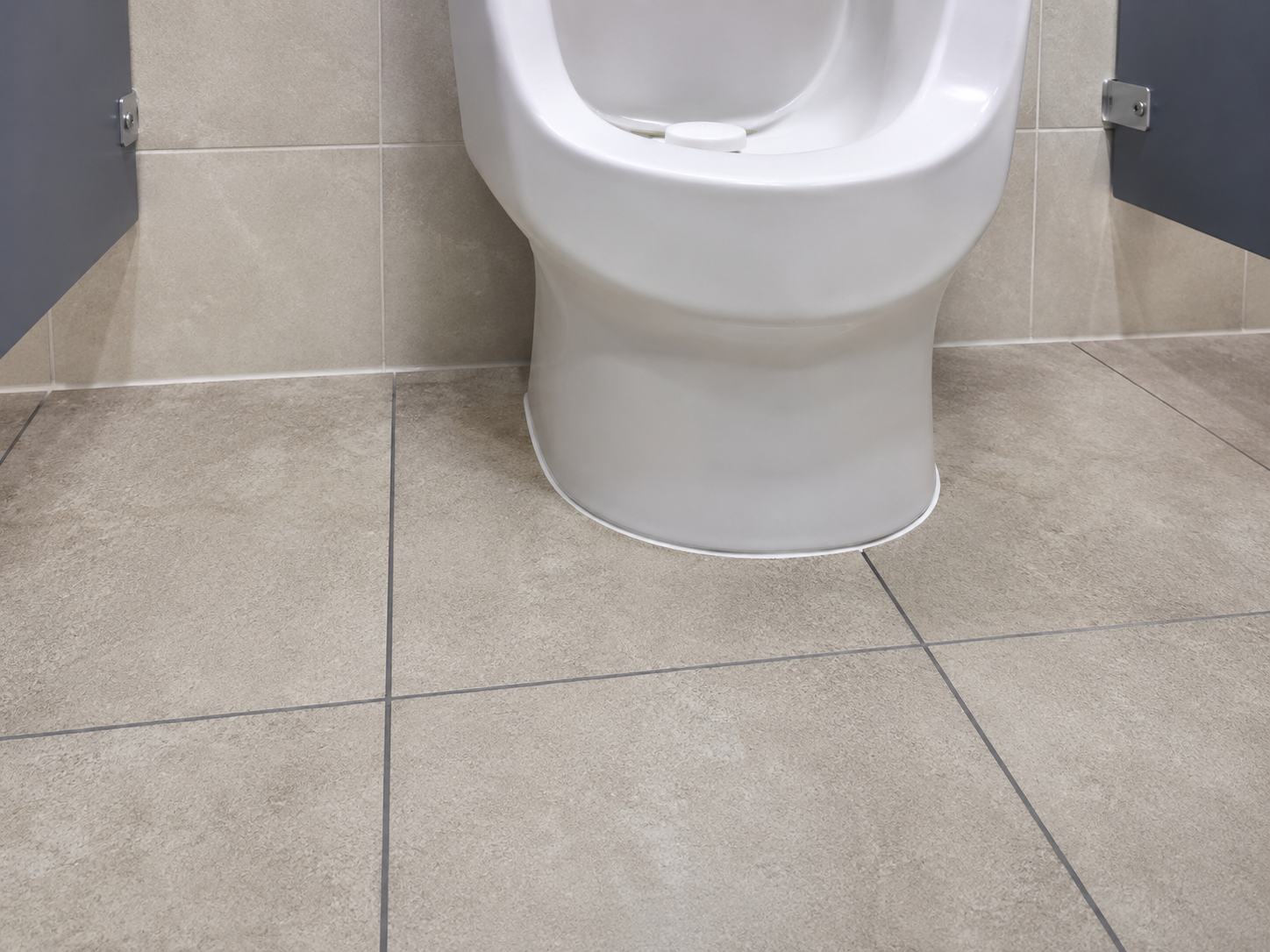
The primary source of persistent restroom odor in commercial facilities is not the toilet bowl, which is regularly cleaned, but the grout and subflooring around floor-mounted urinals and toilets. Urine overspray accumulates under fixtures and in grout pores where conventional cleaning chemicals cannot penetrate effectively. Urea-hydrolyzing bacteria in this residue continuously produce ammonia and other odor compounds that off-gas from the floor even after surface cleaning.
Enzyme treatments formulated for restroom applications (typically containing protease and urease enzyme blends) penetrate grout pores and break down urine deposits at the source rather than masking odor with fragrance. Bacteria treatments in this category also add a sustained population of odor-consuming bacteria in the grout structure.
For facilities struggling with chronic restroom odor that persists despite regular cleaning, a weekly bacteria treatment applied to floor grout and the area under and behind floor-mounted fixtures typically produces visible improvement within two to four weeks. This is particularly valuable for healthcare facilities where odor control and infection management are both critical priorities.
Carpet and Upholstery Spot Treatment
Pet urine, food spills, and other protein-based stains on carpet and upholstery are a persistent challenge because conventional carpet cleaners extract surface soil but leave behind the proteins and fats that cause staining and odor. Enzyme spot treatments break down these compounds in the carpet fiber and backing, eliminating the source of the stain rather than simply cleaning the surface.
For facilities managing pet odor, food and beverage stains in healthcare or food service environments, or any persistent organic stain on carpet or upholstery, enzyme spot treatments produce better long-term results than conventional carpet spotters for organic stains.
Holding Tanks, Portable Units, and Restroom Trailers
Portable restrooms, septic holding tanks, and temporary facilities used at events in Iowa and Nebraska generate concentrated odor from anaerobic decomposition of waste. Bacteria treatments added to holding tanks provide sustained odor control through the same mechanism as drain and grease trap applications: Bacillus bacteria outcompete the odor-producing sulfate-reducing bacteria and continuously break down the organic compounds that feed odor generation.
Where Enzyme Treatments Are Not the Right Tool
Enzyme and bacteria treatments are not a universal replacement for conventional cleaning chemistry. Understanding their limitations prevents misapplication.
For immediate disinfection: Enzymes break down organic matter but do not disinfect. An enzyme cleaner does not kill pathogens and should not be used as a substitute for an EPA-registered disinfectant on surfaces that require microbial-kill claims. They can be part of a two-step process (enzyme treatment followed by disinfection), but do not replace the disinfection step. For those applications, our disinfectants and sanitizers category has the EPA-registered options your facility needs.
For acute blockages: A severe drain blockage caused by accumulated grease or organic material requires a caustic chemical or mechanical clearing to restore flow before bacteria treatments can be effective. Once the flow is restored, bacteria treatments prevent recurrence more effectively than repeated caustic treatments.
For inorganic soils, Enzyme chemistry is specific to organic substrates. Hard water mineral scale, rust, and inorganic chemical deposits are not affected by enzyme treatments and require acid-based or chelating chemistry for removal.
Where pH is extreme: Enzymes are denatured (inactivated) at pH levels below 4 or above 10. In facilities that use strong acid or caustic cleaners, applying enzyme treatments immediately after these products will inactivate the enzymes before any benefit is realized. Allow adequate rinse time and pH neutralization before applying enzyme treatments.
Selecting the Right Enzyme or Bacteria Product
The commercial market for enzyme and bacterial treatments has a wide range of qualities and concentrations. Product selection matters significantly.
Enzyme concentration: Higher concentration products deliver more active enzyme per ounce. Look for products that specify enzyme activity in units rather than just listing enzyme types. A product listing specific enzyme concentrations (e.g., 5,000 LU/mL lipase activity) is more verifiable than one that simply states “contains enzymes.”
Bacteria count and strain specificity: For bacteria treatments, look for products that specify colony-forming units (CFU) per milliliter and identify the bacterial strains. Products specifying Bacillus subtilis, Bacillus licheniformis, and other named strains give better confidence in product composition than generic “beneficial bacteria” labeling.
Temperature stability: Enzyme products should specify the optimal temperature range for activity. Products with broad temperature stability (effective from 50°F to 100°F or wider) perform more consistently across the temperature range encountered in commercial facility drain systems.
Capital Sanitary Supply carries bacteria and enzyme treatments from commercial cleaning manufacturers with verifiable enzyme activity and bacterial count specifications. Our specialists can help match the right product format (liquid concentrate, drain blocks, powder treatments) to your specific application. Browse our full cleaning chemicals catalog to explore the complete range.
Frequently Asked Questions: Enzyme Cleaners for Commercial Facilities
Are enzyme cleaners safe to use in commercial facilities?
Yes. Enzyme cleaners are among the safest categories of cleaning chemistry available for commercial facilities and organic waste management. They are non-caustic, biodegradable, and do not produce the VOC (volatile organic compound) emissions or respiratory hazards associated with many conventional cleaning chemicals. The bacterial strains used in commercial cleaning products (primarily Bacillus species) are classified as BSL-1 organisms, meaning they pose no risk to healthy individuals. Enzyme treatments are commonly used in healthcare and food service environments where chemical safety is a primary concern.
How long do enzyme treatments take to work?
Enzyme treatments work on a different timeline than conventional caustic cleaners. A caustic drain cleaner produces an immediate effect by breaking up blockages chemically within minutes. An enzyme or bacterial treatment produces progressive improvement over days to weeks as the biological population establishes and organic deposits are gradually degraded. For odor control applications, most facilities see measurable improvement within two to four weeks of consistent treatment. For drain maintenance and grease trap management, optimal results typically appear after six to eight weeks of regular dosing.
Can I use enzyme cleaners with my regular disinfectants?
Enzyme and disinfectant products should not be mixed in the same application unless the product label specifically states compatibility. Many disinfectants are formulated to kill bacteria, which means they will also kill the beneficial bacteria in a bacterial treatment if applied simultaneously or without allowing adequate dwell time between applications. In a two-step process, apply the enzyme treatment first, allow adequate contact time, and apply the disinfectant separately. For drain and grease trap applications, enzyme treatments are applied at the end of the day through areas that are not disinfected between treatments.
What is the difference between an enzyme cleaner and a regular drain cleaner?
Conventional drain cleaners rely on caustic chemistry (typically sodium hydroxide or sulfuric acid) to break up blockages through saponification or hydrolysis. They are effective at clearing acute blockages but leave behind biofilm that leads to further accumulation and odor. Enzyme and bacterial drain treatments do not clear acute blockages, but when used consistently in maintained drains, they degrade the biofilm that conventional cleaners leave behind, significantly reducing the accumulation rate and odor generation. The two approaches complement each other: use caustic chemistry to clear a blocked drain, then use bacteria treatments to prevent recurrence.
Are enzyme treatments effective for pet urine odor in commercial facilities?
Yes. Pet urine stains and odors on carpets and hard surfaces are among the applications in which enzyme treatments most consistently outperform conventional cleaners. Urine contains urea, proteins, and urobilin that conventional cleaners extract from the surface without breaking down the compounds within the carpet backing and pad. Enzyme treatments formulated with protease and urease enzymes break down these compounds at the source, eliminating the chemistry responsible for staining and odor rather than masking it. For facilities managing pet access areas, waiting rooms, or any space with persistent urine odor, enzyme-based spot treatment products will yield better long-term results than conventional carpet chemistry.
Get the right enzyme or bacteria treatment for your facility.
Capital Sanitary Supply carries a full range of enzyme and bacteria treatments for drains, grease traps, restroom odor control, and organic waste management across Iowa, Nebraska, and Wisconsin. Our specialists can help you identify the right product and application protocol for the specific challenge you are trying to solve. Call us at (515) 244-4291 or visit capitalsanitary.com to speak with a product specialist today.