
Can liners are one of the most consistently over-specified, over-purchased, and under-optimized products in the facility supply budget. They are bought by habit, replaced when they run out, and rarely evaluated against actual application requirements. The result in most facilities is a closet full of heavy-gauge bags being used for light-duty office waste, thin bags rupturing in kitchen or industrial applications, and a supply budget that has quietly absorbed years of unnecessary cost.
Getting commercial can liners right isn’t complicated, and this buying guide covers everything you need to know. It requires matching three variables to each application: size, gauge (or thickness), and material. When those three variables are matched correctly across every can in your facility, total liner cost typically drops by 15 to 30 percent, with no reduction in performance and far fewer bag failures requiring double-bagging or cleanup.
This commercial can liner buying guide covers everything facility managers in Iowa, Nebraska, and Wisconsin need to make smarter can liner decisions. Browse our full selection of can liners in every gauge and size to find the right product for each area of your facility.
Why Can Liners Be Chronically Over-Specified
The over-specification problem in can liners is driven by a reasonable instinct: nobody wants a bag to fail. When a liner tears and spills waste onto the floor, it creates a sanitation issue, a potential slip hazard, and a cleanup task that takes far more time than swapping a liner would. So facilities default to the heaviest available option and stay there.
The problem is that bag strength is not a single number. It varies by material construction, not just by gauge alone. A well-constructed liner with the right resin blend in a medium gauge will outperform a heavier liner made from inferior resin in the applications most facilities use it for. And a heavy-gauge liner used for dry office paper waste is simply waste: the bag has ten times the containment capability the application requires.
Understanding Can Liner Specifications
Before selecting liners, it helps to understand what the specifications actually mean.
Size: Matching the Liner to the Container
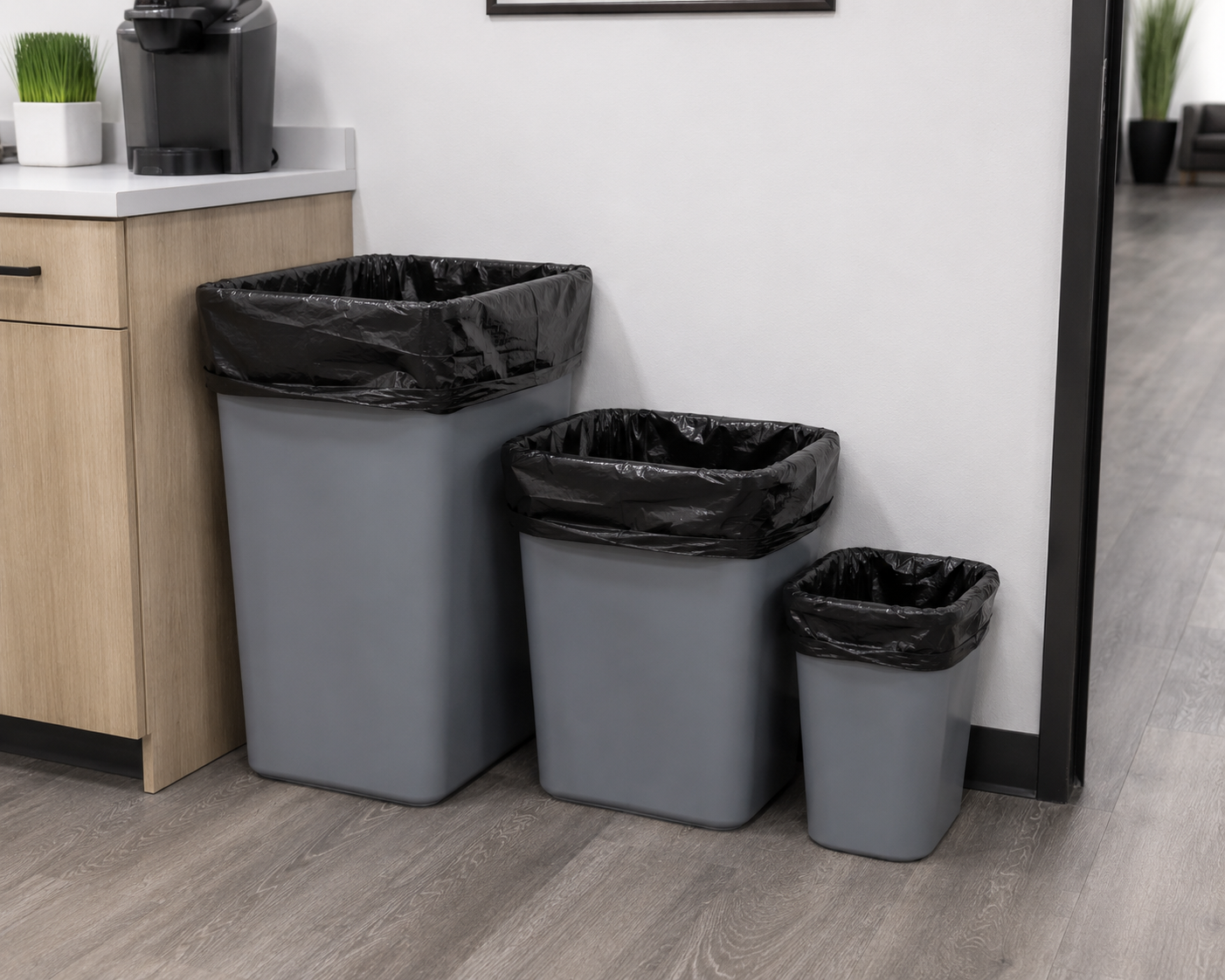
The can liner size is expressed in gallons and determines which size container the liner fits. The liner needs to overhang the rim of the container sufficiently to prevent the liner from being pulled down into the can by the weight of the waste. As a general rule, the liner capacity should be at least 10 gallons larger than the container capacity to ensure adequate overhang and a secure fit on the rim.
A 32-gallon waste container needs at least a 40-gallon liner. A 55-gallon drum typically requires a 60-gallon or 65-gallon liner. Using a liner that is too small for the container causes constant liner pull-down and increases the frequency of double-bagging, which doubles material costs for those applications.
Gauge and Microns: What Thickness Actually Means
Liner thickness is expressed either in mils (thousandths of an inch) for traditional can liners or in microns for products that follow international measurement standards. Heavier gauge means a thicker bag wall. But thickness alone does not determine strength, as different resin blends at the same thickness can have very different performance characteristics.
As a general framework for commercial applications:
Light gauge (0.35 to 0.50 mil): Appropriate for dry office waste, paper, and light trash with no sharp edges. Office restrooms, conference rooms, and administrative areas. These applications do not require heavy containment and can use the lightest adequate liner for maximum economy.
Medium gauge (0.60 to 0.90 mil): Appropriate for general commercial waste with some moisture and soft food waste. Break rooms, cafeterias, retail back-of-house, and general facility waste. This is the workhorse range for most commercial facilities.
Heavy gauge (1.0 to 1.5 mil): Appropriate for wet waste, heavy food waste, industrial debris, and applications requiring puncture resistance. Restaurant kitchens, food processing, custodial waste (broken equipment, sharp objects), and industrial applications. Over-specifying in this range for non-heavy applications is where the most unnecessary cost accumulates.
Extra heavy and drum liners (1.5 mil and above): Industrial, construction, hazardous waste staging, and high-volume food service. These liners are intended for specific high-demand applications and should not be used for standard facility waste.
Resin Type: High-Density vs. Low-Density
This distinction is often more important than gauge alone and is frequently misunderstood.
Low-density polyethylene (LDPE) liners are soft, stretchy, and highly puncture-resistant. They handle irregular shapes and sharp edges without tearing, and they are forgiving under the stress of being pulled from a can at full load. Low-density liners are the right choice for wet waste, food waste, and applications where there is any risk of sharp debris.
High-density polyethylene (HDPE) liners are stiffer, crinklier when handled, and offer much higher tensile strength per unit thickness than low-density alternatives. This means a high-density liner at 6 to 8 microns often performs comparably to a low-density liner at 0.6 mil for dry applications, at a significantly lower material cost. High-density liners are the right choice for dry waste applications, paper and recyclables, and any application without puncture risk or sharp edges.
Many facilities use only low-density liners across all applications because they are familiar and easy to handle. Transitioning dry-waste applications to high-density liners typically delivers 20 to 30 percent material savings with equivalent performance for those specific uses.
Matching Can Liners to Applications: A Room-by-Room Guide
Office Areas and Administrative Spaces
Application: Dry paper waste, packaging, light debris. No moisture, no food waste, no sharp edges.
Recommended specification: High-density liner, light- to medium-gauge, appropriate size for the container. This is the highest-savings opportunity in most commercial buildings because office waste cans are plentiful and consistently over-specified.
Restrooms
Application: Paper towels (heavy, wet), toilet paper, soap packaging. Moderate weight, some moisture.
Recommended specification: Low-density liner, medium gauge. The primary concern is wet weight from paper towels: a restroom canister that is serviced every four hours can accumulate substantial weight from damp paper towels, so the liner needs to handle a wet load without stretching to failure.
Break Rooms and Cafeterias
Application: Food waste, beverage containers, and packaging with residual liquids. Wet waste with some risk of leakage.
Recommended specification: Low-density liner, medium- to heavy-gauge, depending on volume. Odor-control liner options are worth evaluating for cafeteria applications to reduce odor transmission between service intervals.
Restaurant Kitchens
Application: Heavy food waste, grease-laden packaging, bones, and sharp objects. High weight, high moisture, puncture risk.
Recommended specification: Low-density liner, heavy gauge. This is the correct application for thick, heavy-duty liners. Our food service supplies program includes the heavy-duty can liner formats that commercial kitchens require. Using heavy-gauge liners in the kitchen while switching to lighter applications to appropriate lower gauges is the correct optimization.
Industrial and Maintenance Areas
Application: Heavy debris, construction waste, broken equipment, sharp edges. Variable.
Recommended specification: Low-density liner, heavy- to extra-heavy-gauge. Industrial facility operations should not use cost reduction as the primary decision factor because failures in these applications create cleanup, safety, and contamination problems disproportionate to the liner cost saved.
Recycling Stations
Application: Dry recyclables, cardboard, plastic containers. Light load with no moisture or sharp debris.
Recommended specification: High-density liner, light gauge, clear or translucent to allow visual verification of correct sorting. Clear liners for recycling containers are a best practice that reduces sorting errors when bags are placed at collection points.
Liner Color and Its Practical Uses
Color-coding can liners by waste stream or facility area is a straightforward way to reduce sorting errors and reinforce waste management protocols.
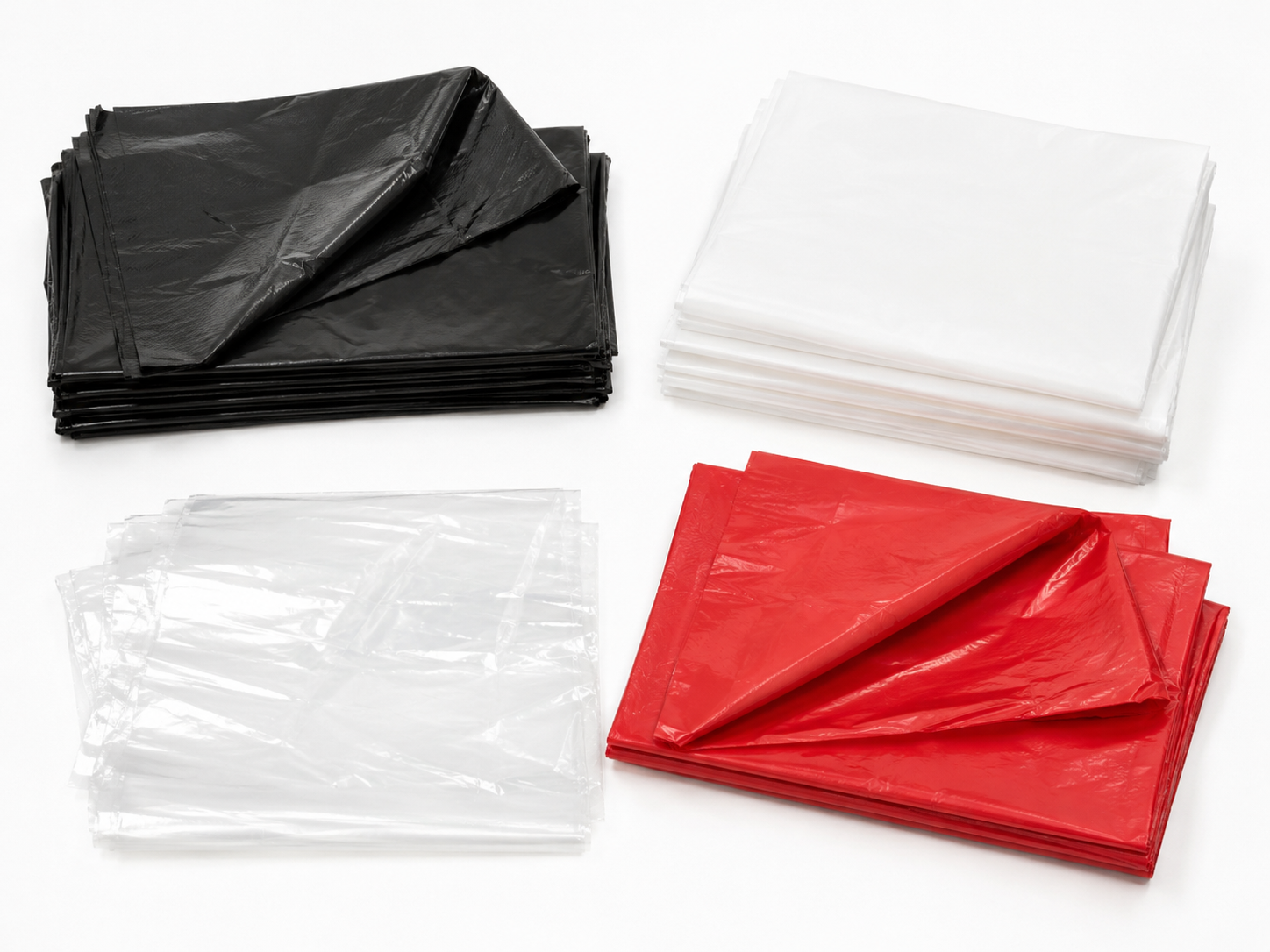
Black: General waste. The universal standard for non-specific trash in most commercial settings.
White or natural: Kitchen and food waste in some food service settings; also widely used in healthcare facilities for non-hazardous clinical waste.
Clear: Recycling streams, where visual confirmation of contents is useful.
Red: Regulated medical waste or biohazard applications in healthcare settings. The use of red liners is often governed by state and federal regulations for these applications.
Blue: Recycling in many municipal programs.
For multi-site or multi-area facilities, assigning area-specific liner colors reduces mis-sorting and simplifies waste audit processes.
Common Can Liner Mistakes That Increase Cost
Double-bagging by default. Double-bagging is a symptom of using the wrong liner for the application. It should be an exception, not a standard practice. If double-bagging is routine in any application, the specified liner is wrong: either the gauge is too light for the load, or the liner is low-density where puncture is not the primary failure risk, and a heavier gauge is needed.
Buying by brand familiarity rather than specification. The liner on the supply closet shelf is often there because it has always been there. A specification review against actual application requirements will almost always identify opportunities to right-size gauge and resin type across multiple applications.
Not accounting for can geometry. A round 33-gallon can requires a different liner dimension than a square 33-gallon can of the same nominal capacity. Liner width and length need to match the specific container geometry for proper fit and overhang. Capital Sanitary Supply’s product line covers a full range of dimensions to match the most common container types in commercial use.
Ignoring overhang requirements. A liner that barely reaches the rim of the can will be pulled down into the can under load, requiring the cleaning staff to fish it out with the contents. This is a sanitation issue and a staff satisfaction problem. Always specify liners with adequate overhang for the container size. Our broader janitorial supplies catalog includes the waste management products and accessories to complete your program.
Frequently Asked Questions: Commercial Can Liners Buying Guide
What gauge trash bag do I need for commercial use?
The correct gauge depends on your application. Dry office waste can use light-gauge, high-density liners (6-8 microns). General commercial and restroom waste typically requires medium-gauge low-density liners (0.60 to 0.90 mil). Restaurant kitchens, food processing, and industrial applications need heavy-gauge low-density liners (1.0 to 1.5 mil). Matching gauge to application — the core principle of this commercial can liners buying guide — significantly reduces costs.
What is the difference between high-density and low-density can liners?
High-density (HDPE) liners are stiffer, crinklier when handled, and offer higher tensile strength per unit of thickness. They are best for dry waste applications with no sharp edges or risk of punctures. Low-density (LDPE) liners are softer, stretchier, and more puncture-resistant. They handle wet waste, food waste, and applications with irregular or sharp debris better. Using high-density liners for dry applications and low-density liners for wet or sharp applications is the most economical approach.
How do I know what size liner I need?
Measure your waste container in gallons and add at least 10 to ensure adequate overhang. A 32-gallon container needs at least a 40-gallon liner. For containers with non-standard geometry, also verify that the liner width and length dimensions match your specific container rather than relying on the nominal gallon rating alone. Capital Sanitary Supply carries a full range of sizes and can help match liner dimensions to your containers.
Why do my trash bags keep falling into the can?
Liner pull-down occurs when a liner is too small for the container. The liner does not have enough overhang to stay secured on the rim under the weight of the waste. Switch to a liner size at least 10 gallons larger than your container to ensure proper fit and rim attachment.
Where can I buy commercial can liners wholesale in Iowa, Nebraska, or Wisconsin?
Capital Sanitary Supply stocks a complete range of can liners in all gauges, sizes, resin types, and colors for commercial and industrial facilities across Iowa, Nebraska, and Wisconsin. We help facility managers right-size their liner programs to reduce cost and eliminate waste. Call us at (515) 244-4291 or visit capitalsanitary.com to speak with a specialist.
Ready to right-size your can liner program?
Capital Sanitary Supply stocks commercial can liners in every gauge, size, and format for facilities across Iowa, Nebraska, and Wisconsin. Our specialists will review your current liner applications and help you identify where you are over-specifying so you can redirect that budget where it matters more. Call us at (515) 244-4291 or visit capitalsanitary.com today.