
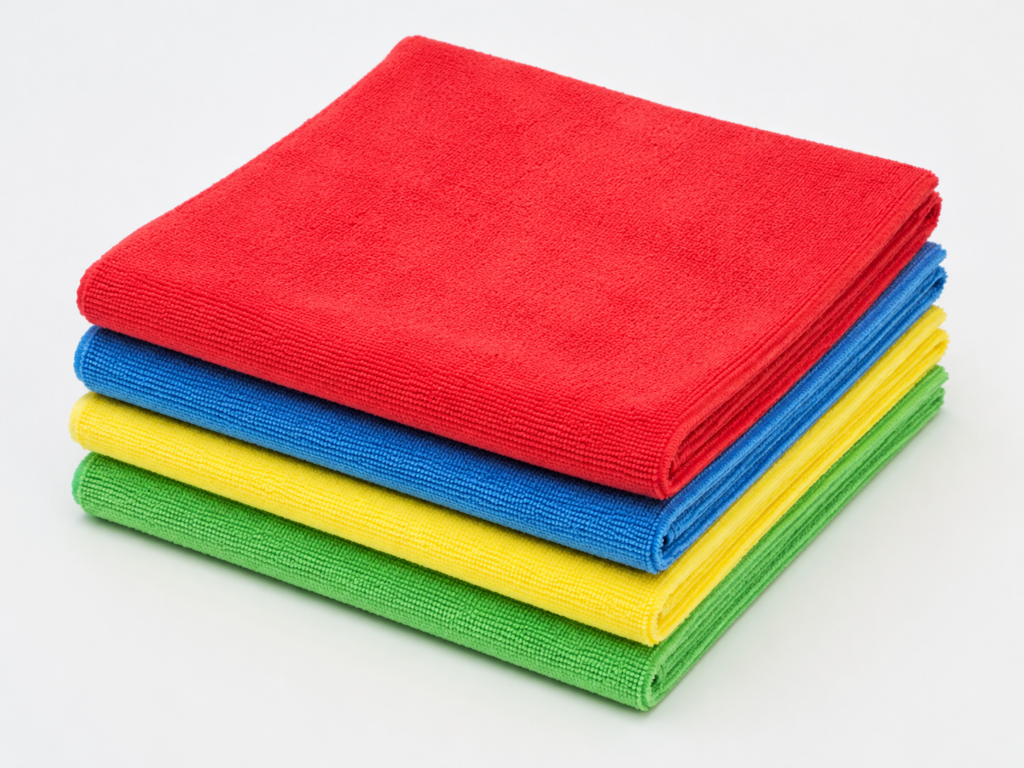
Walk through the supply closet of almost any commercial facility in Iowa, Nebraska, or Wisconsin, and you will find both microfiber cleaning cloths and disposable wipers in use. In some cases, both products are used on the same surfaces by different staff members on different shifts. In many facilities, nobody is entirely sure which approach is the right one, or whether the mix of products currently in use is delivering the best value.
This matters more than most facility managers realize. Wiping and surface-cleaning materials are among the most frequently purchased consumables in any commercial operation, and the choice between microfiber and disposable formats has real consequences for cleaning performance, infection control, labor efficiency, and total supply costs. Getting this decision right, by surface type and facility environment, is one of the more practical cost and quality improvements available to any operations team. Browse our full range of commercial microfiber wipers and cloths to see the options available for your facility.
What Microfiber Actually Does Differently
Microfiber is not just a marketing term for a soft cloth. It refers specifically to a synthetic fiber with a thickness of less than 1 denier, which is finer than a strand of silk. The physical structure of microfiber creates a surface that functions fundamentally differently from conventional cotton or paper wiping materials.
Microfiber fibers are typically split during manufacturing into wedge-shaped strands that create millions of microscopic channels per square inch of cloth. These channels create capillary action that physically traps and lifts soil, bacteria, and moisture from surfaces rather than simply pushing them across them. When used dry, microfiber generates a static charge that attracts fine dust particles. When used damp, it captures and holds contaminants in the fiber structure until laundering.
The practical result is that a properly used microfiber cloth picks up more soil per pass than a cotton cloth or a disposable wiper, requires less chemical to achieve the same level of cleaning, and leaves surfaces drier after use. Independent testing has shown that microfiber used with water alone achieves bacterial removal rates of 99 percent or higher on smooth surfaces, compared to 30 percent for a conventional cloth used with a general-purpose cleaner.
The Case for Disposable Wipers
Reusable microfiber cloths, for all their performance advantages, carry a risk that disposable wipers do not: cross-contamination.
A microfiber cloth used on a contaminated surface and not immediately isolated from clean surfaces can transfer pathogens from room to room or from surface to surface. In healthcare environments, food service kitchens, and any facility with strict infection control requirements, an improperly managed reusable cloth program can increase the risk of cross-contamination compared to a single-use disposable approach.
Disposable wipers eliminate this risk entirely. A single-use wiper is used once on one surface and discarded. There is no laundering requirement, no risk of incomplete decontamination during the wash, no color-coding program to train staff, and no possibility that a cloth used in a restroom ends up on a food-preparation surface.
Disposable wipers also eliminate the labor and cost of laundering, which is a real operational consideration. Laundering reusable microfiber correctly requires the proper washing temperature, specialized detergent, and the absence of fabric softener or bleach, which can damage the fiber structure. In facilities without dedicated laundry infrastructure, outsourcing microfiber laundering can significantly erode the cost advantage of reusables.
The Real Cost Comparison for Microfiber Cleaning Cloths in Commercial Facilities
Calculating the true cost of microfiber versus disposable wipers requires accounting for all costs, not just the purchase price per unit.
Disposable Wipers
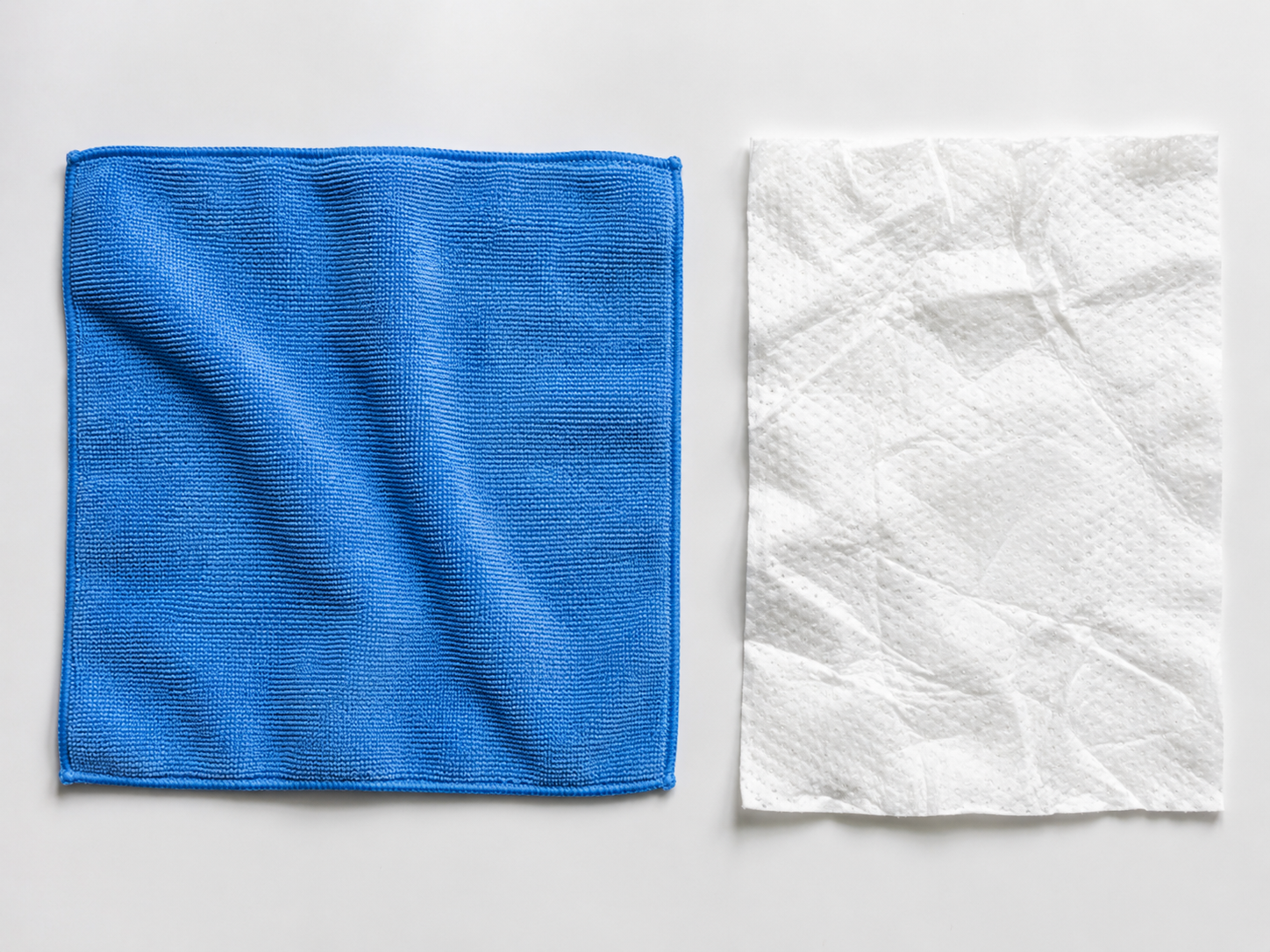
The cost of disposable wipers varies by material and construction. Basic DRC (double re-creped) wipers, lightweight nonwoven wipers, and airlaid paper wipers are the most economical options for general wiping tasks. Heavy-duty industrial wipes, pre-moistened disinfecting wipes, and scrim-reinforced wipers cost more per unit but offer greater durability or added chemistry.
A typical cost range for disposable wipers is $0.03 to $0.25 per wipe, depending on the material, with pre-moistened disinfecting wipes at the higher end due to the added chemistry. In a high-use facility going through hundreds of wipes per day, this adds up quickly.
Reusable Microfiber Cloths
A commercial-grade microfiber cloth typically costs between $2 and $8 per cloth and can withstand 200 to 500 laundering cycles before performance degrades significantly. Dividing the purchase cost by the number of uses yields a per-use cost of $0.004 to $0.04, which is dramatically lower than most disposable options on a pure material cost basis.
However, the full cost calculation needs to include laundering cost (water, energy, detergent, labor), replacement cost as clothes wear out, and the cost of the management infrastructure required to run a reusable program (laundry bags, color-coded systems, staff training, quality inspection).
When all costs are included, reusable microfiber typically delivers the lowest total cost in facilities with established laundry capability and meaningful wiper volume. The break-even point compared to disposables typically falls between six months and two years, depending on volume and laundry cost structure. Our janitorial supplies program covers both reusable microfiber formats and the full range of disposable wiper options.
The Infection Control Factor
For any facility with a meaningful infection-control obligation, the relative hygiene risk of each approach needs to be weighed against its cost.
Where disposables win on infection control: Patient rooms and clinical spaces in healthcare; food preparation surfaces in restaurant and commercial kitchen environments; any surface with a known pathogen-contamination risk; and high-touch public surfaces in settings where cross-contamination is difficult to prevent through training alone.
Where microfiber wins on infection control: When properly managed with a color-coded system, microfiber can outperform disposables in bacterial removal rates from surfaces due to its superior physical capture mechanism. The keyword is “properly managed.” Without a strong color-coding and handling program, the infection control advantage disappears.
Color-Coded Microfiber: The Practical Standard
The industry standard for managing cross-contamination risk in reusable microfiber programs is color coding. Each color is assigned to a specific area or surface type, and cloths are never used outside their designated zone.
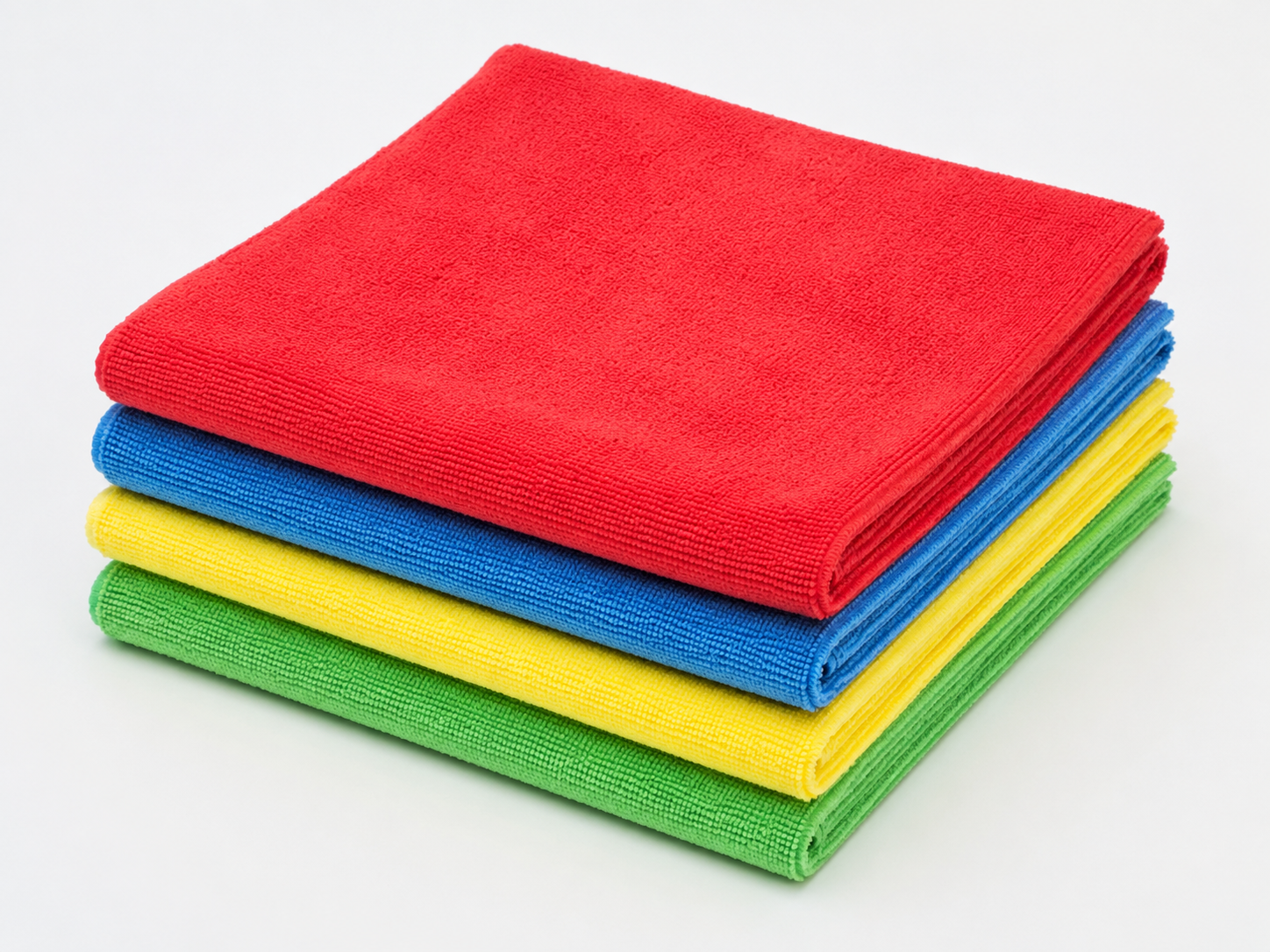
A common color assignment for commercial facilities is:
- Red: Restrooms and high-contamination zones
- Yellow: General facility surfaces and touch points
- Green: Food preparation and food service areas
- Blue: Glass, mirrors, and low-risk surfaces
Staff are trained to use the correct color in each zone and to place used cloths directly into a separate laundry bag rather than returning them to a clean cloth supply. This approach, when consistently followed, eliminates the risk of cross-contamination that makes some facility managers hesitant about reusable cloths.
Matching the Right Product to Each Application
The most practical approach for most commercial facilities is not an either-or choice between microfiber and disposables. It is a deliberate decision by application.
Use reusable microfiber for:
- Routine daily cleaning of floors, counters, and general surfaces
- Glass and mirror cleaning, where microfiber’s streak-free performance is difficult to replicate with disposables
- Dust mopping and dust management, where microfiber’s electrostatic properties outperform alternatives significantly
- High-volume wiping tasks where the per-use cost savings of reusables are maximized
Use disposable wipers for:
- Disinfecting high-touch surfaces in infection-sensitive environments
- Any single-use application where isolation from cross-contamination is the priority
- Facilities without laundry infrastructure, where the true cost of reusables would exceed disposables
- Pre-moistened applications where the combined wipe-plus-chemistry format reduces steps for cleaning staff
For industrial and manufacturing facilities, the calculation often favors disposables for heavy-duty applications involving grease, solvents, or industrial grime — and microfiber for general housekeeping and surface maintenance.
Frequently Asked Questions: Microfiber Cleaning Cloths for Commercial Facilities
Are microfiber cloths better than disposable wipers for commercial cleaning?
Microfiber cleaning cloths outperform most disposable wipers for routine surface cleaning in terms of soil removal, bacterial pickup, and per-use cost. However, disposable wipers offer advantages in infection control environments where cross-contamination risk is high, in applications requiring pre-moistened chemistry, and in facilities without laundry infrastructure to support a reusable program. The right choice depends on the specific application and facility environment.
How long does a commercial microfiber cloth last?
A commercial-grade microfiber cloth typically lasts between 200 and 500 laundering cycles when washed correctly, which means avoiding fabric softener, bleach, and high-heat drying, which can damage the fiber structure. With proper care, a single cloth costing $3 to $6 may deliver $0.01 to $0.02 per use over its lifespan, representing significant savings compared to single-use disposable products for high-volume applications.
What is a color-coded cleaning cloth system?
Color coding assigns specific cloth colors to specific areas or surface types within a facility to prevent cross-contamination. For example, red cloths may be designated for restrooms only, while blue cloths are used for glass and mirrors. Staff use each color only in its designated zone, and place used clothes directly in a separate laundry bag. Color-coded systems are the industry standard for managing cross-contamination risk in reusable microfiber programs.
What types of disposable wipers are available for commercial use?
Commercial disposable wipers are available in several constructions: DRC (double re-creped) wipers for general-purpose wiping; airlaid paper wipers for higher absorbency; scrim-reinforced wipers for durability in tough applications; nonwoven wipers for industrial use; and pre-moistened disinfecting wipes that combine a wiping substrate with a cleaning or disinfecting chemistry. Capital Sanitary Supply carries all major wiper formats for commercial and industrial facilities.
How do I calculate the true cost of disposable wipers vs. microfiber cloths?
To calculate true cost, compare the total cost per use rather than the purchase price per unit. For disposables, the cost per use is simply the price per wipe. For reusable microfiber, divide the cloth cost by the expected number of uses (200 to 500 wash cycles), then add a per-use allocation for laundering cost (water, energy, detergent, labor). The format with the lower total cost per use for your specific facility volume and laundry infrastructure is the more economical choice.
Need help choosing the right wiping products for your facility?
Capital Sanitary Supply carries the full range of commercial microfiber programs, disposable wiper formats, and color-coded cleaning systems for facilities across Iowa, Nebraska, and Wisconsin. Call us at (515) 244-4291 or visit capitalsanitary.com to talk with a product specialist about the right wiping program for your facility.